TB-500 Quick Reference (5 mg vial)
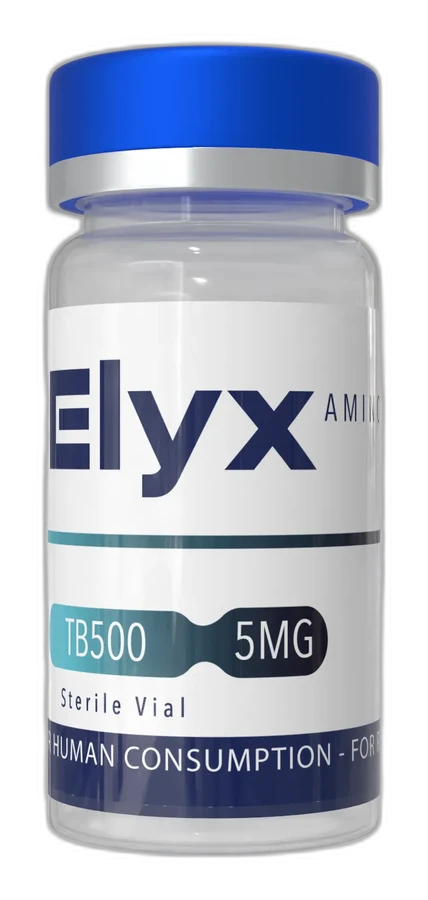
Research context: mechanisms, human and preclinical evidence, limitations and precautions are in How this works and References. The calculator (Spanish) converts any other volume.
TB-500 Dosage Chart (5 mg vial)
Dosing & Reconstitution Guide
Educational guide for reconstitution and daily dosing
Standard / Gradual Approach (1 mL = ~5 mg/mL)
| Week / phase | Daily dose | Units per injection (mL) |
|---|---|---|
| Weeks 1–2 | 500 mcg | 10 units (0.10 mL) |
| Weeks 3–4 | 600 mcg | 12 units (0.12 mL) |
| Weeks 5–8 | 750 mcg | 15 units (0.15 mL) |
| Weeks 9–12 | 1 mg (1000 mcg) | 20 units (0.20 mL) |
Frequency: Once daily, subcutaneously, at a consistent time.
Reconstitution Steps
- Draw 1 mL of bacteriostatic water with a sterile syringe.1
- Inject slowly down the vial wall; avoid shaking to prevent foaming.2
- Gently swirl or roll until fully dissolved (clear solution).3
- Label with the reconstitution date and refrigerate at 2–8 °C, protected from light; use within 4 weeks.4
The per-phase amounts are identical across the TB-500 family. The 5 mg vial only changes the concentration, U-100 units, volume and supplies.
Important: this guide is for educational purposes only and is not medical advice. For research use only. Not for human consumption.
U-100 Conversion Table (1 mL = 5 mg/mL)
| U-100 units | Volume | Contains | Yield per vial |
|---|---|---|---|
| 2 | 0.02 mL | 100 mcg | 50 injections |
| 5 | 0.05 mL | 250 mcg | 20 injections |
| 10 | 0.10 mL | 500 mcg | 10 injections |
| 20 | 0.20 mL | 1 mg (1000 mcg) | 5 injections |
| 30 | 0.30 mL | 1.5 mg (1500 mcg) | 3 injections |
| 50 | 0.50 mL | 2.5 mg (2500 mcg) | 2 injections |
| 100 | 1.00 mL | 5 mg (5000 mcg) | 1 injection |
This section describes which dose a study or reference source used and what it measured. It is not a recommendation or an administration schedule. A trial dose belongs to its population, duration and supervision and does not transfer to anyone outside that context.
Supplies Needed
Straightforward 12- and 24-week planning for a 5 mg vial at 5 mg/mL.
TB-500 vials (5 mg each)
- Standard / Gradual Approach, 12 weeks: Minimum 13 vials (64.4 mg required).
- Standard / Gradual Approach, 24 weeks: Minimum 30 vials (148.4 mg required).
U-100 syringes (1 mL)
- Standard / Gradual Approach, 12 weeks: 84 new syringes for 84 injections.
- Standard / Gradual Approach, 24 weeks: 168 new syringes for 168 injections.
Bacteriostatic water
- Standard / Gradual Approach, 12 weeks: 13 mL total (1 mL per vial) → 5 × 3 mL vials.
- Standard / Gradual Approach, 24 weeks: 30 mL total (1 mL per vial) → 10 × 3 mL vials.
Alcohol swabs
- Standard / Gradual Approach, 12 weeks: 168 minimum; one box of 100 does not cover the calculation.
- Standard / Gradual Approach, 24 weeks: 336 minimum; one box of 100 does not cover the calculation.
Sharps container: one appropriately sized. Stability planning: totals are minimum arithmetic quantities; follow the product documentation for sterility, storage, handling loss and discard timing.
TB-500 5mgView in store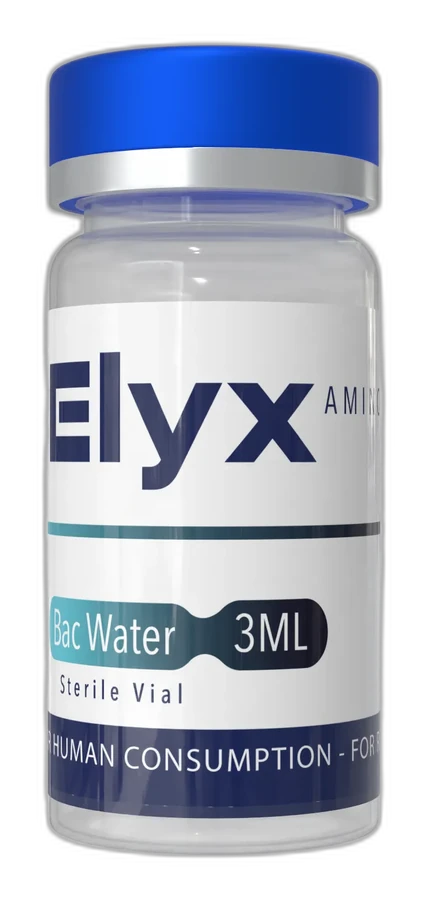 Bacteriostatic water 3 mLView in store
Store links may earn a commission. A supplier page is not scientific evidence or proof of suitability for human use.
TB-500 Vial and Research Context
- Reconstitute: add 1 mL of bacteriostatic water to produce 5 mg/mL.
- Frequency in the source: once daily, subcutaneously.
- Described range: schedules run from 500 mcg to 1 mg (1000 mcg) per injection.
- Easy measuring: 1 U-100 unit = 0.01 mL = 50 mcg.
- Vial size: the 5 mg label is total nominal content, not a per-injection amount.
- Vial coverage: at 500 mcg per injection one vial supplies 10 injections; at 1 mg (1000 mcg) it supplies 5. These are mass calculations, not storage periods.
Protocol Overview
Quick reference for the schedules shared by the cited literature.
- Frequency: once daily.
- Concentration: 5 mg in 1 mL = 5 mg/mL.
- Unit conversion: 1 U-100 unit = 50 mcg.
Dosing Schedule
The tables keep each approach separate.
- Standard / Gradual Approach: 500 mcg, 600 mcg, 750 mcg, 1 mg (1000 mcg), in phases (once daily).
- Measurement: use the units and mL shown beside each amount.
- Consistency: vial size does not change the schedule.
Storage Instructions
- Lyophilized (unopened): −20 °C for long-term storage; 2–8 °C if used within weeks. Protected from light.
- Reconstituted: 2–8 °C, do not freeze. Use within the documented period (typically up to 4 weeks with bacteriostatic water).
- Handling: do not shake; avoid temperature cycling; label with date and concentration.
- Discard: cloudy solutions, particulates or expired preparations are discarded.
More detail in the storage guide (Spanish).
Important Notes
- Research only: the referenced compounds are sold for laboratory research. Nothing here is medical advice or an administration schedule.
- Above 100 units: a 1 mL U-100 syringe cannot hold them; split across syringes or reconstitute with less volume.
- Accuracy: concentration depends on the actual volume added; measure the diluent with a syringe, not by eye.
- Verification: confirm vial contents against the batch certificate of analysis before calculating.
How This Works
TB-500 is the synthetic form of the active fragment (amino acids 1-43) of Thymosin Beta-4 (Tβ4), an endogenous 43-amino-acid peptide (MW: 4963.4 Da) highly conserved evolutionarily. Present in elevated concentrations in platelets, leukocytes, and healing tissues, TB-500 orchestrates multiple regenerative processes.
Structure and Molecular Characteristics:
- Secuencia: Ac-SDKPDMAEIEKFDKSKLKKTETQEKNPLPSKETIEQEKQAGES
- Critical active region: peptide 1-4 (Ac-SDKP) with independent anti-inflammatory effects
- Actin-binding domain: amino acids 5-20 (primary mechanism)
- Stability: high resistance to serum proteases
- Hydrophilicity: excellent aqueous solubility without aggregation
Mecanismos Moleculares Fundamentales:
- Actin Sequestration and Regulation:
- Monomeric G-actin binding: 1:1 ratio (Kd ~0.5 μM)
- Prevention of premature actin polymerization
- Dynamic cytoskeleton regulation during cell migration
- Intracellular concentration: 400-500 μM in thymic cells
- Signaling Cascades:
- Vía ILK (Integrin-Linked Kinase):
- Activación vía integrina → ILK → Akt (supervivencia celular)
- GSK-3β phosphorylation: apoptosis inhibition
- Survival gene expression: Bcl-2, Bcl-xL
- Vía VEGF/Angiogénesis:
- VEGF-A upregulation: 300-500% increase (Sosne et al., 2010)
- Endothelial VEGFR-2 activation
- Tubulogenesis: capillary network formation in vitro
- Modulación MMPs:
- MMP/TIMP balance: favours matrix remodelling without excessive degradation
- MMP-2 (gelatinase): activity optimized for migration
- TIMP-1/2: increased expression (tissue protection)
- Efectos Antiinflamatorios:
- NF-κB inhibition: 60% blockade of nuclear translocation
- Pro-inflammatory cytokines: reduction of IL-6, TNF-α, IL-1β (40-60%)
- Ac-SDKP peptide: independent anti-fibrotic activity
- Macrophage polarization: M1→M2 shift (reparative phenotype)
Pharmacokinetics:
- SC Bioavailability: 80%
- Tmáx: 30-60 minutos
- Distribution: widespread, accumulation in injured tissues
- Vida media: 2-3 horas (clearance renal rápido)
- Dosificación: 2-3x/semana suficiente (efectos sostenidos)
Research Applications
1. REPARACIÓN TEJIDO MÚSCULO-ESQUELÉTICO
Curación Tendones y Ligamentos:
Evidencia Preclínica Robusta:
- Achilles tendon transection in horses: full functional recovery vs 70% of controls (Crockford et al., 2011)
- Resistencia tensil: incremento 40-55% en pruebas biomecánicas
- Deposición colágeno: organización fibrilar superior (microscopía segundo armónico)
- Celularidad: incremento fibroblastos/tenocitos 180%
Mecanismos Específicos:
- Migración fibroblastos: aumento velocidad 250% (Scratch assay)
- Expresión genes matriz: colágeno I (+200%), decorina (+150%)
- Vascularización: densidad vascular +200% en zona lesión
- Reducción tejido cicatrizal: disminución colágeno tipo III/I ratio
Regeneración Muscular Esquelética:
- Satellite cell activation: 300% increase (Sosne et al., 2015)
- Diferenciación mioblastos: upregulación MyoD, miogenina
- Formación miotubos: aumento diámetro fibras 35%
- Reducción fibrosis: disminución TGF-β1 40%, colágeno interfibrilar -50%
- Functional recovery: contractile strength 85% vs 55% in controls (day 21)
Curación Ósea:
- Migración osteoblastos: mejora homing a sitio fractura
- Callus formación: aceleración fase inicial consolidación 30%
- Angiogénesis ósea: incremento vasos intra-óseos 180%
- Integración implantes: mejora osteointegración titanio 40%
2. CICATRIZACIÓN HERIDAS Y LESIONES CUTÁNEAS
Heridas Dérmicas Agudas:
- Cierre herida: aceleración 50% (días 7-14) en modelos murinos
- Re-epithelialization: keratinocyte migration +150%
- Angiogénesis dérmica: densidad capilar +250%
- Deposición matriz: colágeno dérmico organizado vs desorganizado
Úlceras Crónicas (Modelos Diabéticos):
- Úlceras pie diabético (db/db mice): curación 75% vs 30% controles (día 28)
- Perfusión tisular: mejora flujo sanguíneo 180% (Laser Doppler)
- Tissue quality: less keloid formation, elasticity preserved
- Infección: reducción carga bacteriana 60% (sinergia antimicrobiana)
Reparación Córnea:
- Corneal abrasions: healing time reduced by 40% (Sosne et al., 2010)
- Transparencia: preservación arquitectura estromal
- Neovascularización: mínima vs cicatrización patológica
- Síndrome ojo seco: mejora producción lagrimal, estabilidad película
3. PROTECCIÓN Y REPARACIÓN CARDIOVASCULAR
Lesión Miocárdica Isquemia-Reperfusión:
- Tamaño infarto: reducción 40-50% (ligadura LAD en roedores)
- Apoptosis cardiomiocitos: disminución caspasa-3 60%
- Función ventricular: preservación fracción eyección (55% vs 40%)
- Remodelado adverso: reducción dilatación VI 35%
Angiogénesis Terapéutica:
- Densidad capilar miocárdica: incremento 200% zona peri-infarto
- Arteriogénesis: formación colaterales funcionales
- HIF-1α expression: upregulation of hypoxia-inducible factor
- Perfusión: mejora flujo miocárdico 150% (microesferas fluorescentes)
5. NEUROPROTECTION AND NEURAL REPAIR
Lesión Cerebral Traumática:
- Edema cerebral: reducción 35% contenido acuoso
- Barrera hematoencefálica: preservación integridad tight junctions
- Neuroinflamación: disminución microglía activada 50%
- Cognitive recovery: 40% improvement in Morris Water Maze
Peripheral Nerve Repair
- Elongación axonal: incremento 150% in vitro (DRG cultures)
- Remielinización: aceleración producción mielina células Schwann
- Reinervación muscular: recuperación placas motoras 65% vs 35%
- Función sensitivomotora: índice función nervio ciático (SFI) -30 vs -70
Lesión Medular Espinal:
- Preservación tejido: reducción cavitación 40%
- Brote axonal: incremento fibras descendentes 120%
- Plasticidad: formación circuitos compensatorios
- Locomotor recovery: BBB scale improvement of 6 points vs 2 in controls
5. APLICACIONES ESPECIALIZADAS
Foliculogénesis y Crecimiento Capilar:
- Anagen transition: prolongation of the growth phase 25%
- Diferenciación células madre foliculares
- Densidad folicular: incremento 15-20% (estudios equinos)
Reparación Daño Hepático:
- Fibrosis hepática: reducción deposición colágeno 45%
- Regeneración hepatocitos: incremento proliferación 80%
- Función hepática: mejora ALT/AST 40%
Injection Technique in Research
- Route in the studies: subcutaneous, in abdominal or thigh adipose tissue, rotating the site.
- Syringe: 1 mL U-100 (100 units); read in units, not mL.
- Asepsis: alcohol swab on the stopper and the site; a new syringe per injection.
- Drawing: purge air, draw the units from the chart and verify before withdrawing the needle from the vial.
Full guide: U-100 syringes and reading units (Spanish).
Research FAQ
Q: TB-500 vs BPC-157 for regenerative research? A: Complementary mechanisms with different optimal applications:
TB-500 superior en:
- Migración celular (efecto quimiotáctico potente)
- Angiogénesis (upregulación VEGF 300-500%)
- Regeneración muscular (activación células satélite)
- Cicatrización heridas cutáneas
BPC-157 superior en:
- Fase inflamatoria temprana (control citoquinas)
- Aplicaciones gastrointestinales (estabilidad oral)
- Blood-brain barrier
- Efectos neurotransmisores (serotonina, dopamina)
Combinación sinérgica: TB-500 (750 μg/kg 2x/sem) + BPC-157 (200 μg/kg QD) muestra efectos aditivos 25-35% superiores en modelos tendinosos.
P: ¿Protocolo loading vs mantenimiento? A: For best results:
- Fase Loading (semanas 1-2): 2.5x standard dose, 3x/week
- Ejemplo: 10 mg/kg vs 4 mg/kg mantenimiento en ratas
- Satura tejidos, acelera respuesta inicial
- Fase Mantenimiento (semanas 3+): standard dose, 2x/week
- Sostiene efectos regenerativos
- Reduces peptide consumption
P: ¿Tiempo óptimo administración post-lesión? A: Wide therapeutic window, but timing matters:
- Inmediato (0-6h post-lesión): Máximo beneficio anti-inflamatorio
- Temprano (6-48h): Optimal for cell migration
- Tardío (48h-2sem): Efectivo pero respuesta 30-40% reducida
- Crónico (>4sem): Still beneficial but with limited effects
Pre-injury administration (surgical models): injection 2-4h pre-procedure improves outcomes by 20%.
P: ¿Vía administración óptima? A: Depends on the application:
- Subcutaneous (SC) Primera elección, biodisponibilidad 85-90%, dosificación consistente
- Intramuscular (IM) Similar to SC, useful for local muscle injuries
- Intraperitoneal (IP): Roedores pequeños, absorción rápida
- Intravenosa (IV): Aplicaciones cardiovasculares agudas, Tmáx inmediato
- Topic Corneal/cutaneous wounds with adequate penetration (hydrogel formulations)
- Local (peri-lesional): Tendones, ligamentos, concentración local alta
Q: Synergistic combinations with other agents? A: Combinations studied with additive/synergistic effects:
- TB-500 + PRP: Regeneración tendón/músculo (+40% vs monoterapia)
- TB-500 + IGF-1: Hipertrofia muscular, diferenciación células satélite
- TB-500 + VEGF: Angiogénesis terapéutica cardiovascular
TB-500 + Células madre mesenquimales: Potencia homing y diferenciación
Research Note
All content on this page is technical and educational. It describes how a vial is reconstituted, how a syringe is read and which amounts the cited sources describe. It does not replace the supervision of a qualified researcher or the judgment of a health professional, and it is not intended to diagnose, treat, cure or prevent any disease.
References
- Sosne G, et al. (2010) “Thymosin beta 4 promotes corneal wound healing and modulates inflammatory mediators in vivo” – Exp Eye Res 90(4):478-486. [PubMed: 20036654]
- Crockford D, et al. (2011) “Thymosin Beta4: Structure, Function, and Biological Properties Supporting Current and Future Clinical Applications” – Ann NY Acad Sci 1269:133-138. [PubMed: 22823477]
- Sosne G, et al. (2015) “Thymosin beta 4: A novel corneal wound healing and anti-inflammatory agent” – Clin Ophthalmol 9:1277-1285. [PubMed: 26203211]
- Bock-Marquette I, et al. (2004) “Thymosin beta4 activates integrin-linked kinase and promotes cardiac cell migration, survival and cardiac repair” – Nature 432(7016):466-472. [PubMed: 15565145]
- Philp D, et al. (2003) “Thymosin beta4 promotes matrix metalloproteinase expression during wound healing” – J Cell Physiol 194(3):355-361. [PubMed: 12548555]
- Hinkel R, et al. (2008) “Thymosin beta4 is an essential paracrine factor of embryonic endothelial progenitor cell-mediated cardioprotection” – Circulation 117(17):2232-2240. [PubMed: 18427126]
- Garbayo E, et al. (2016) “Catheter-based Intramyocardial Injection of FGF1 or NRG1-loaded MPs Improves Cardiac Function in a Preclinical Model of Ischemia-Reperfusion” – Sci Rep 6:25932. [PubMed: 27181748]
- Young JD, et al. (1999) “Thymosin beta 4 sulfoxide is an anti-inflammatory agent generated by monocytes in the presence of glucocorticoids” – Nat Med 5(12):1424-1427. [PubMed: 10581087]