TB-500 Quick Reference (10 mg vial)
Research context: mechanisms, human and preclinical evidence, limitations and precautions are in How this works and References. The calculator (Spanish) converts any other volume.
TB-500 Dosage Chart (10 mg vial)
Dosing & Reconstitution Guide
Educational guide for reconstitution and daily dosing
Standard / Gradual Approach (2 mL = ~5 mg/mL)
| Week / phase | Daily dose | Units per injection (mL) |
|---|---|---|
| Weeks 1–2 | 500 mcg | 10 units (0.10 mL) |
| Weeks 3–4 | 600 mcg | 12 units (0.12 mL) |
| Weeks 5–8 | 750 mcg | 15 units (0.15 mL) |
| Weeks 9–12 | 1 mg (1000 mcg) | 20 units (0.20 mL) |
Frequency: Once daily, subcutaneously, at a consistent time.
Reconstitution Steps
- Draw 2 mL of bacteriostatic water with a sterile syringe.1
- Inject slowly down the vial wall; avoid shaking to prevent foaming.2
- Gently swirl or roll until fully dissolved (clear solution).3
- Label with the reconstitution date and refrigerate at 2–8 °C, protected from light; use within 4 weeks.4
The per-phase amounts are identical across the TB-500 family. The 10 mg vial only changes the concentration, U-100 units, volume and supplies.
Important: this guide is for educational purposes only and is not medical advice. For research use only. Not for human consumption.
U-100 Conversion Table (2 mL = 5 mg/mL)
| U-100 units | Volume | Contains | Yield per vial |
|---|---|---|---|
| 2 | 0.02 mL | 100 mcg | 100 injections |
| 5 | 0.05 mL | 250 mcg | 40 injections |
| 10 | 0.10 mL | 500 mcg | 20 injections |
| 20 | 0.20 mL | 1 mg (1000 mcg) | 10 injections |
| 30 | 0.30 mL | 1.5 mg (1500 mcg) | 6 injections |
| 50 | 0.50 mL | 2.5 mg (2500 mcg) | 4 injections |
| 100 | 1.00 mL | 5 mg (5000 mcg) | 2 injections |
This section describes which dose a study or reference source used and what it measured. It is not a recommendation or an administration schedule. A trial dose belongs to its population, duration and supervision and does not transfer to anyone outside that context.
Supplies Needed
Straightforward 12- and 24-week planning for a 10 mg vial at 5 mg/mL.
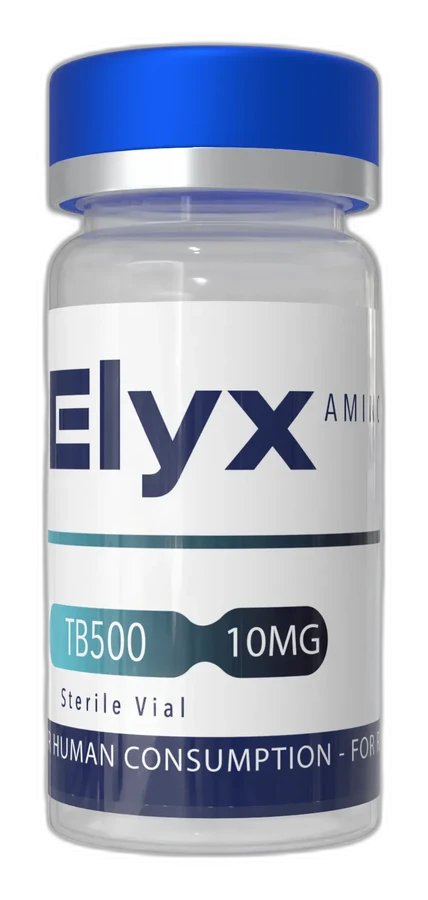
TB-500 vials (10 mg each)
- Standard / Gradual Approach, 12 weeks: Minimum 7 vials (64.4 mg required).
- Standard / Gradual Approach, 24 weeks: Minimum 15 vials (148.4 mg required).
U-100 syringes (1 mL)
- Standard / Gradual Approach, 12 weeks: 84 new syringes for 84 injections.
- Standard / Gradual Approach, 24 weeks: 168 new syringes for 168 injections.
Bacteriostatic water
- Standard / Gradual Approach, 12 weeks: 14 mL total (2 mL per vial) → 5 × 3 mL vials.
- Standard / Gradual Approach, 24 weeks: 30 mL total (2 mL per vial) → 10 × 3 mL vials.
Alcohol swabs
- Standard / Gradual Approach, 12 weeks: 168 minimum; one box of 100 does not cover the calculation.
- Standard / Gradual Approach, 24 weeks: 336 minimum; one box of 100 does not cover the calculation.
Sharps container: one appropriately sized. Stability planning: totals are minimum arithmetic quantities; follow the product documentation for sterility, storage, handling loss and discard timing.
TB-500 10mgView in store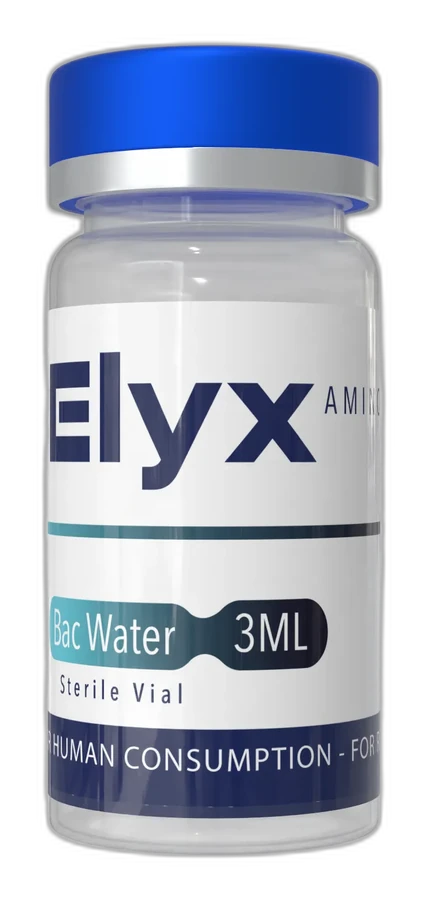 Bacteriostatic water 3 mLView in store
Store links may earn a commission. A supplier page is not scientific evidence or proof of suitability for human use.
TB-500 Vial and Research Context
- Reconstitute: add 2 mL of bacteriostatic water to produce 5 mg/mL.
- Frequency in the source: once daily, subcutaneously.
- Described range: schedules run from 500 mcg to 1 mg (1000 mcg) per injection.
- Easy measuring: 1 U-100 unit = 0.01 mL = 50 mcg.
- Vial size: the 10 mg label is total nominal content, not a per-injection amount.
- Vial coverage: at 500 mcg per injection one vial supplies 20 injections; at 1 mg (1000 mcg) it supplies 10. These are mass calculations, not storage periods.
Protocol Overview
Quick reference for the schedules shared by the cited literature.
- Frequency: once daily.
- Concentration: 10 mg in 2 mL = 5 mg/mL.
- Unit conversion: 1 U-100 unit = 50 mcg.
Dosing Schedule
The tables keep each approach separate.
- Standard / Gradual Approach: 500 mcg, 600 mcg, 750 mcg, 1 mg (1000 mcg), in phases (once daily).
- Measurement: use the units and mL shown beside each amount.
- Consistency: vial size does not change the schedule.
Storage Instructions
- Lyophilized (unopened): −20 °C for long-term storage; 2–8 °C if used within weeks. Protected from light.
- Reconstituted: 2–8 °C, do not freeze. Use within the documented period (typically up to 4 weeks with bacteriostatic water).
- Handling: do not shake; avoid temperature cycling; label with date and concentration.
- Discard: cloudy solutions, particulates or expired preparations are discarded.
More detail in the storage guide (Spanish).
Important Notes
- Research only: the referenced compounds are sold for laboratory research. Nothing here is medical advice or an administration schedule.
- Above 100 units: a 1 mL U-100 syringe cannot hold them; split across syringes or reconstitute with less volume.
- Accuracy: concentration depends on the actual volume added; measure the diluent with a syringe, not by eye.
- Verification: confirm vial contents against the batch certificate of analysis before calculating.
How This Works
TB-500 exerts its effects primarily through regulation of G-actin (globular) and F-actin (filamentous):
- Secuestro de actina G: maintains a pool of monomeric actin available for the dynamic formation of filaments during cell migration
- Promoción de angiogénesis: estimula proliferación y migración de células endoteliales, aumentando densidad vascular en tejidos dañados
- Modulación inflamatoria: reduce expresión de citoquinas pro-inflamatorias y promueve resolución de inflamación
- Estimulación de células madre: promueve diferenciación de células progenitoras locales
Research Applications
- Lesiones musculares y tendinosas en deporte de alto rendimiento
- Post-surgical orthopedic recovery
- Corneal healing (ophthalmic drops in clinical research)
- Post-infarction cardioprotection
- Skin healing and chronic wounds
- Androgenic hair loss (topical use)
Precautions Described in the Literature
Mild documented antiplatelet effect. Discontinue 48 hours before any surgical procedure. Contraindicated in the presence of active tumors. Do not combine with anticoagulants without professional supervision.
Studied Combinations
- TB-500 + BPC-157 (separate version of the blend)
- TB-500 + CJC No DAC + Ipamorelin to enhance repair with GH support
- TB-500 + GHK-Cu para piel y cabello
Injection Technique in Research
- Route in the studies: subcutaneous, in abdominal or thigh adipose tissue, rotating the site.
- Syringe: 1 mL U-100 (100 units); read in units, not mL.
- Asepsis: alcohol swab on the stopper and the site; a new syringe per injection.
- Drawing: purge air, draw the units from the chart and verify before withdrawing the needle from the vial.
Full guide: U-100 syringes and reading units (Spanish).
Research Note
All content on this page is technical and educational. It describes how a vial is reconstituted, how a syringe is read and which amounts the cited sources describe. It does not replace the supervision of a qualified researcher or the judgment of a health professional, and it is not intended to diagnose, treat, cure or prevent any disease.
References
- Goldstein AL, Hannappel E, Kleinman HK. Thymosin beta4: actin-sequestering protein moonlights to repair injured tissues. Trends Mol Med. 2005;11(9):421-429.
- Crockford D. Development of thymosin beta4 for treatment of patients with ischemic heart disease. Ann N Y Acad Sci. 2007;1112:385-395.
- Sosne G, Qiu P, Goldstein AL, Wheater M. Biological activities of thymosin beta4 defined by active sites in short peptide sequences. FASEB J. 2010;24(7):2144-2151.