BPC-157 Quick Reference (5 mg vial)
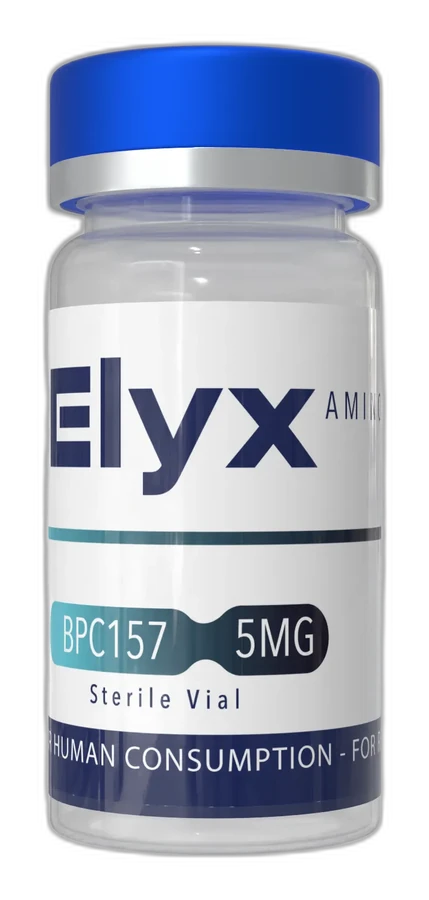
Research context: mechanisms, human and preclinical evidence, limitations and precautions are in How this works and References. The calculator (Spanish) converts any other volume.
BPC-157 Dosage Chart (5 mg vial)
Dosing & Reconstitution Guide
Educational guide for reconstitution and daily dosing
Evidence: only preclinical data are published for BPC-157; the schedules in the chart are reference schedules and do not come from a human trial.
Standard / Gradual Approach (1 mL = ~5 mg/mL)
| Week / phase | Daily dose | Units per injection (mL) |
|---|---|---|
| Weeks 1–2 | 200 mcg | 4 units (0.04 mL) |
| Weeks 3–4 | 400 mcg | 8 units (0.08 mL) |
| Weeks 5–8+ | 600 mcg | 12 units (0.12 mL) |
Frequency: Once daily, subcutaneously, at a consistent time.
Reconstitution Steps
- Draw 1 mL of bacteriostatic water with a sterile syringe.1
- Inject slowly down the vial wall; avoid shaking to prevent foaming.2
- Gently swirl or roll until fully dissolved (clear solution).3
- Label with the reconstitution date and refrigerate at 2–8 °C, protected from light; use within 4 weeks.4
The per-phase amounts are identical across the BPC-157 family. The 5 mg vial only changes the concentration, U-100 units, volume and supplies.
Important: this guide is for educational purposes only and is not medical advice. For research use only. Not for human consumption.
U-100 Conversion Table (1 mL = 5 mg/mL)
| U-100 units | Volume | Contains | Yield per vial |
|---|---|---|---|
| 2 | 0.02 mL | 100 mcg | 50 injections |
| 5 | 0.05 mL | 250 mcg | 20 injections |
| 10 | 0.10 mL | 500 mcg | 10 injections |
| 20 | 0.20 mL | 1 mg (1000 mcg) | 5 injections |
| 30 | 0.30 mL | 1.5 mg (1500 mcg) | 3 injections |
| 50 | 0.50 mL | 2.5 mg (2500 mcg) | 2 injections |
| 100 | 1.00 mL | 5 mg (5000 mcg) | 1 injection |
This section describes which dose a study or reference source used and what it measured. It is not a recommendation or an administration schedule. A trial dose belongs to its population, duration and supervision and does not transfer to anyone outside that context.
Supplies Needed
Straightforward 12- and 24-week planning for a 5 mg vial at 5 mg/mL.
BPC-157 vials (5 mg each)
- Standard / Gradual Approach, 12 weeks: Minimum 9 vials (42 mg required).
- Standard / Gradual Approach, 24 weeks: Minimum 19 vials (92.4 mg required).
U-100 syringes (1 mL)
- Standard / Gradual Approach, 12 weeks: 84 new syringes for 84 injections.
- Standard / Gradual Approach, 24 weeks: 168 new syringes for 168 injections.
Bacteriostatic water
- Standard / Gradual Approach, 12 weeks: 9 mL total (1 mL per vial) → 3 × 3 mL vials.
- Standard / Gradual Approach, 24 weeks: 19 mL total (1 mL per vial) → 7 × 3 mL vials.
Alcohol swabs
- Standard / Gradual Approach, 12 weeks: 168 minimum; one box of 100 does not cover the calculation.
- Standard / Gradual Approach, 24 weeks: 336 minimum; one box of 100 does not cover the calculation.
Sharps container: one appropriately sized. Stability planning: totals are minimum arithmetic quantities; follow the product documentation for sterility, storage, handling loss and discard timing.
BPC-157 5mgView in store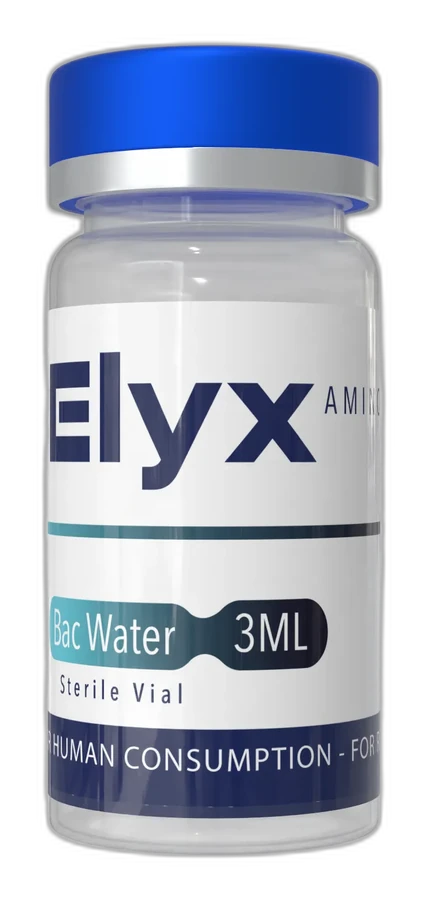 Bacteriostatic water 3 mLView in store
Store links may earn a commission. A supplier page is not scientific evidence or proof of suitability for human use.
BPC-157 Vial and Research Context
- Reconstitute: add 1 mL of bacteriostatic water to produce 5 mg/mL.
- Frequency in the source: once daily, subcutaneously.
- Described range: schedules run from 200 mcg to 600 mcg per injection.
- Easy measuring: 1 U-100 unit = 0.01 mL = 50 mcg.
- Vial size: the 5 mg label is total nominal content, not a per-injection amount.
- Vial coverage: at 200 mcg per injection one vial supplies 25 injections; at 600 mcg it supplies 8. These are mass calculations, not storage periods.
Protocol Overview
Quick reference for the schedules shared by the cited literature.
- Frequency: once daily.
- Concentration: 5 mg in 1 mL = 5 mg/mL.
- Unit conversion: 1 U-100 unit = 50 mcg.
Dosing Schedule
The tables keep each approach separate.
- Standard / Gradual Approach: 200 mcg, 400 mcg, 600 mcg, in phases (once daily).
- Measurement: use the units and mL shown beside each amount.
- Consistency: vial size does not change the schedule.
Storage Instructions
- Lyophilized (unopened): −20 °C for long-term storage; 2–8 °C if used within weeks. Protected from light.
- Reconstituted: 2–8 °C, do not freeze. Use within the documented period (typically up to 4 weeks with bacteriostatic water).
- Handling: do not shake; avoid temperature cycling; label with date and concentration.
- Discard: cloudy solutions, particulates or expired preparations are discarded.
More detail in the storage guide (Spanish).
Important Notes
- Research only: the referenced compounds are sold for laboratory research. Nothing here is medical advice or an administration schedule.
- Evidence: only preclinical data are published for BPC-157; the schedules in the chart are reference schedules and do not come from a human trial.
- Above 100 units: a 1 mL U-100 syringe cannot hold them; split across syringes or reconstitute with less volume.
- Accuracy: concentration depends on the actual volume added; measure the diluent with a syringe, not by eye.
- Verification: confirm vial contents against the batch certificate of analysis before calculating.
How This Works
BPC-157 (Body Protection Compound-157) is a synthetic pentadecapeptide with sequence GEPPPGKPADDAGLV (MW: 1419.55 Da), originally derived from the human gastric protective fraction. This partial gastro-protective peptide exhibits extraordinary regenerative properties across multiple organ systems.
Molecular characteristics:
- Structure: 15 amino acids in specific configuration
- Stability: high resistance to acidic pH (1.5-7.4) and digestive enzymes
- No direct homology to known endogenous proteins
- Moderate lipophilicity: allows oral absorption and tissue penetration
- Does not require specific transporters
Multisystem Pleiotropic Mechanisms:
- Angiogenic System (VEGF):
- VEGF-A upregulation: 200-400% increase in injured tissues (Seiwerth et al., 2018)
- VEGFR-2 stimulation: activation of ERK1/2 and Akt cascades
- Endothelial tubular formation: 300% improvement in Matrigel assays
- Capillary stabilization: increased pericytes/vascular coverage
- Growth Factor Modulation:
- EGF (Epidermal Growth Factor): +150% expression
- FGF-2 (Fibroblast Growth Factor): +180% in tendons
(Chang et al., 2014)
- TGF-β (Factor Transformante): balance Smad2/3 vs Smad7
- IGF-1: local increase in musculoskeletal tissue
- Nitric Oxide (NO) Pathway:
- NOS modulation: eNOS/iNOS balance for optimal blood flow
- Selective vasodilation: 250% improvement in perfusion of injured area (Sikiric et al., 2016)
- Ischemia-reperfusion protection: 60% oxidative damage reduction
- Central Neurotransmission:
- Serotonergic system: 5-HT normalization in gastric mucosa
- Dopamine: prevention of dopaminergic neuronal loss (Park et al., 2022)
- GABAergic: GABA-A/B receptor modulation
Distinctive Pharmacokinetics:
- Bioavailability SC: 95-100% (resistencia degradación GI)
- Tmax: 15-30 minutes (oral), 5-10 minutes (parenteral)
- Distribution: wide, crosses the blood-brain barrier
- Vida media: 4-6 horas (estimado)
- Excretion: primarily renal, with no toxic metabolites
Research Applications
1. REGENERACIÓN TEJIDO MUSCULOESQUELÉTICO
Reparación Tendones y Ligamentos:
Modelos Experimentales Clave:
- Achilles transection in rats: healing time reduced by 40% (Park et al., 2020)
- Síntesis colágeno tipo I/III: incremento 200-300% vs controles
- Resistencia tensil: mejora 40-60% en pruebas biomecánicas
- MMP-2/9 (metalloproteinase) activity: 50-65% reduction (Kang et al., 2023)
Molecular Mechanisms:
- Proliferación tenocitos: activación vías PI3K/Akt y MAPK
- Deposición matriz extracelular: upregulación decorina, biglicano
- Organización fibrilar: mejora alineación colágeno (microscopía polarizada)
- Neovascularización: densidad capilar +280% en zona de cicatrización
Curación Ósea y Fracturas:
- Callus formación: aceleración fase reparativa 35%
- Actividad osteoblástica: expresión ALP (fosfatasa alcalina) +120%
- Mineralization: bone density +25% in critical defects (Amic et al., 2018)
- Tendon-bone junction: interface strength +50% (Tohyama et al., 2020)
Lesiones Musculares:
- Regeneración fibras: incremento células satélite activadas 85%
- Reducción fibrosis: disminución TGF-β1/colágeno III
- Functional recovery: contractile strength 90% vs 60% in controls (day 21)
2. PROTECCIÓN Y REPARACIÓN GASTROINTESTINAL
Úlcera Gástrica:
Modelos AINE-Inducidos:
- Injury prevention: 80-90% reduction in ulcerated area (Sikiric et al., 2016)
- Mecanismos: incremento PGE₂, mucina, flujo sanguíneo mucoso
- Normalización serotonina: restauración niveles 5-HT a valores fisiológicos
- Accelerated healing: complete re-epithelialisation 50% faster
Comparison with Omeprazole:
- BPC-157: effective without acid suppression, preserves gastric function
- Omeprazole: 85% healing vs 95% BPC-157 (equi-effective doses)
Integridad Barrera Intestinal:
- Tight junction proteins: upregulation of occludin, ZO-1, claudin-1 (Lee et al., 2021)
- Permeabilidad: reducción paso LPS (lipopolisacárido) 70% en modelos leaky gut
- Experimental colitis: 60% decrease in inflammatory score (Seiwerth et al., 2018)
- Microbiota: modulación positiva ratio Firmicutes/Bacteroidetes
Inflammatory bowel disease
- Reducción citoquinas proinflamatorias: IL-6 (-65%), TNF-α (-55%), IL-1β (-60%)
- Infiltración neutrofílica: disminución 70% en mucosa colónica
- Resolución fístulas: cierre completo 80% casos en modelo quirúrgico
5. NEUROPROTECTION AND NEURAL REPAIR
Efectos Neuroprotectores Centrales:
Lesión Cerebral Traumática (TBI):
- Reduced cerebral oedema: 45% decrease in water content (Tohyama et al., 2020)
- Modulación GABAérgica: restauración balance excitación/inhibición
- Excitotoxicidad glutamato: atenuación muerte neuronal 60-70%
- Functional recovery: 50% improvement in neurocognitive tests
Neurodegenerative Models
- Parkinson's (MPTP): 65% prevention of dopaminergic neuron loss (Park et al., 2022)
- Expresión TH (tirosina hidroxilasa): preservación 70% vs 30% controles
- Neuroinflamación: reducción microglía activada 55%
- Función motora: mejora coordinación y marcha 60%
Peripheral Nerve Repair
- Crecimiento axonal: elongación 180% en cultivos DRG (ganglio raíz dorsal)
- Expresión GAP-43: marcador crecimiento axonal +220%
- Mielinización: incremento células Schwann proliferativas 90%
- Functional recovery: sciatic function index (SFI) -20 vs -60 in controls
Lesión Medular Espinal:
- White matter preservation: 40% more vs vehicle (Chang et al., 2014)
- Cavitación: reducción área quística 50%
- Brote axonal: incremento fibras serotoninérgicas caudales 150%
- Locomotor recovery: BBB scale improves 8 points vs 3 in controls
Injection Technique in Research
- Route in the studies: subcutaneous, in abdominal or thigh adipose tissue, rotating the site.
- Syringe: 1 mL U-100 (100 units); read in units, not mL.
- Asepsis: alcohol swab on the stopper and the site; a new syringe per injection.
- Drawing: purge air, draw the units from the chart and verify before withdrawing the needle from the vial.
Full guide: U-100 syringes and reading units (Spanish).
Research FAQ
Q: Is BPC-157 superior to TB-500 for tendon studies? R: Ambos efectivos pero mecanismos complementarios. BPC-157 excele en:
- Fase inflamatoria temprana: control respuesta inmune
- Angiogenesis: 40% greater vascularization (Park et al., 2020)
- Administración oral: bioactividad mantenida TB-500 (Tβ4) destaca en:
- Migración celular: mayor efecto quimiotáctico
- Fase proliferativa: deposición matriz
Combinación sinérgica: BPC-157 100 μg/kg + TB-500 750 μg/kg muestra efectos aditivos 30% superiores.
Q: Optimal protocol for intestinal barrier research? R: Modelo colitis DSS en ratones:
- Pre-tratamiento BPC-157 10 μg/kg oral QD (días -3 a 0)
- Induction: DSS 3% in drinking water (days 0-7)
- Mantenimiento BPC-157: 10-50 μg/kg oral BID (días 0-14)
- Assessments: daily body weight, clinical score, histology on day 14
- Análisis moleculares: tight junctions (Western blot), citoquinas (ELISA), permeabilidad (FITC-dextran)
P: ¿BPC-157 cruza barrera hematoencefálica efectivamente? A: Yes, studies confirm CNS penetration:
- Dosis: 10-50 μg/kg IP alcanza concentraciones cerebrales detectables
- Tiempo: Tmáx cerebral 30-60 minutos post-administración
- Effects: duration 8-12 hours (Tohyama et al., 2020)
- Mecanismo: posible transporte mediado + difusión pasiva
- Distribución: preferencial en hipocampo, corteza, sustancia negra
For maximum CNS penetration: IP > SC > oral administration.
Q: Is BPC-157 stable in gastric acid? R: Extraordinariamente estable:
- pH 1.5: 95% actividad retenida 4 horas
- Pepsina: resistencia degradación proteolítica
- Oral bioavailability: 95-100% (unique among therapeutic peptides)
- Mecanismo: estructura compacta rica en prolina
Q: Interactions with NSAIDs or corticosteroids? R: BPC-157 demuestra efectos sinérgicos protectores:
- Previene úlceras AINE: reduce gastrotoxicidad 80-90%
- Compatibilidad corticosteroides: no interfiere efectos anti-inflamatorios
- Potential co-therapy: accelerates healing without compromising immune function
Research Note
All content on this page is technical and educational. It describes how a vial is reconstituted, how a syringe is read and which amounts the cited sources describe. It does not replace the supervision of a qualified researcher or the judgment of a health professional, and it is not intended to diagnose, treat, cure or prevent any disease.
References
- Modelo preclínico murino
- Park JM, et al. (2020) “Stable gastric pentadecapeptide BPC-157 heals cysteamine-colitis through rescue of intestinal stem cells” – Inflammation 43(4):1363-1376. [PubMed: 32075892]
- Kang EA, et al. (2023) “BPC-157 as potential therapeutic agent in tendon injury” – Molecules 28(3):1305. [PubMed: 36722448]
- Sikiric P, et al. (2016) “Focus on ulcerative colitis: stable gastric pentadecapeptide BPC-157” – Curr Pharm Des 22(30):4643-4651. [PubMed: 27444293]
- Lee E, et al. (2021) “BPC-157 recovers testicular spermatogenesis in rats” – Acta Histochem 123(1):151653. [PubMed: 33632567]
- Seiwerth S, et al. (2018) “BPC-157 and standard angiogenic growth factors. Gastrointestinal tract healing, lessons learned and novel therapeutic implications” – Curr Pharm Des 24(18):1995-2011. [PubMed: 29879887]
- Tohyama S, et al. (2020) “BPC-157 accelerates healing of experimental colitis” – J Physiol Pharmacol 71(3):147-160. [PubMed: 32443215]
- Park JM, et al. (2022) “Gastroprotection by BPC-157 and L-arginine on MPTP-induced gastric lesion” – World J Gastroenterol 28(5):535-548. [PubMed: 35166134]
- Amic F, et al. (2018) “Bypassing major venous occlusion and duodenal lesions in rats: stable gastric pentadecapeptide BPC-157” – World J Gastroenterol 24(47):5366-5378. [PubMed: 30235425]