Tirzepatide Quick Reference (5 mg vial)
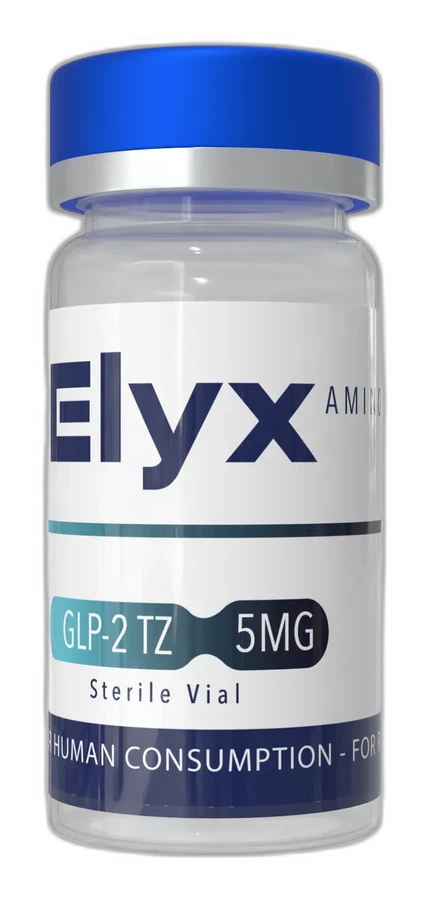
Research context: mechanisms, human and preclinical evidence, limitations and precautions are in How this works and References. The calculator (Spanish) converts any other volume.
Tirzepatide Dosage Chart (5 mg vial)
Dosing & Reconstitution Guide
Educational guide for reconstitution and weekly dosing
Standard Weekly Escalation Schedule (1 mL = ~5 mg/mL)
| Study phase | Weekly dose | Units per injection (mL) |
|---|---|---|
| Weeks 1 to 4 | 2.5 mg (2500 mcg) | 50 units (0.50 mL) |
| Weeks 5 to 8 | 5 mg (5000 mcg) | 100 units (1.00 mL) |
| Weeks 9 to 12 | 7.5 mg (7500 mcg) | Split: 2 × 75 units (0.75 mL each) |
| Weeks 13 to 16 | 10 mg (10000 mcg) | Split: 2 × 100 units (1.00 mL each) |
| Weeks 17 to 20 | 12.5 mg (12500 mcg) | Split: 3 × 83.3 units (0.83 mL each) |
| Weeks 21+ | 15 mg (15000 mcg) | Split: 3 × 100 units (1.00 mL each) |
Frequency: Once weekly, subcutaneously, at a consistent time. Rows above 100 units exceed a 1 mL syringe: they are split across injections and the supply calculation counts each syringe.
Reconstitution Steps
- Draw 1 mL of bacteriostatic water with a sterile syringe.1
- Inject slowly down the vial wall; avoid shaking to prevent foaming.2
- Gently swirl or roll until fully dissolved (clear solution).3
- Label with the reconstitution date and refrigerate at 2–8 °C, protected from light; use within 4 weeks.4
The per-phase amounts are identical across the Tirzepatide family. The 5 mg vial only changes the concentration, U-100 units, volume and supplies.
Important: this guide is for educational purposes only and is not medical advice. For research use only. Not for human consumption.
U-100 Conversion Table (1 mL = 5 mg/mL)
| U-100 units | Volume | Contains | Yield per vial |
|---|---|---|---|
| 2 | 0.02 mL | 100 mcg | 50 injections |
| 5 | 0.05 mL | 250 mcg | 20 injections |
| 10 | 0.10 mL | 500 mcg | 10 injections |
| 20 | 0.20 mL | 1 mg (1000 mcg) | 5 injections |
| 30 | 0.30 mL | 1.5 mg (1500 mcg) | 3 injections |
| 50 | 0.50 mL | 2.5 mg (2500 mcg) | 2 injections |
| 100 | 1.00 mL | 5 mg (5000 mcg) | 1 injection |
This section describes which dose a study or reference source used and what it measured. It is not a recommendation or an administration schedule. A trial dose belongs to its population, duration and supervision and does not transfer to anyone outside that context.
Supplies Needed
Straightforward 12- and 24-week planning for a 5 mg vial at 5 mg/mL.
Tirzepatide vials (5 mg each)
- Standard Weekly Escalation Schedule, 12 weeks: Minimum 12 vials (60 mg required).
- Standard Weekly Escalation Schedule, 24 weeks: Minimum 42 vials (210 mg required).
U-100 syringes (1 mL)
- Standard Weekly Escalation Schedule, 12 weeks: 16 new syringes for 12 injections.
- Standard Weekly Escalation Schedule, 24 weeks: 48 new syringes for 24 injections.
Bacteriostatic water
- Standard Weekly Escalation Schedule, 12 weeks: 12 mL total (1 mL per vial) → 4 × 3 mL vials.
- Standard Weekly Escalation Schedule, 24 weeks: 42 mL total (1 mL per vial) → 14 × 3 mL vials.
Alcohol swabs
- Standard Weekly Escalation Schedule, 12 weeks: 32 minimum; one box of 100 covers the calculation.
- Standard Weekly Escalation Schedule, 24 weeks: 96 minimum; one box of 100 covers the calculation.
Sharps container: one appropriately sized. Stability planning: totals are minimum arithmetic quantities; follow the product documentation for sterility, storage, handling loss and discard timing.
Tirzepatide 5mgView in store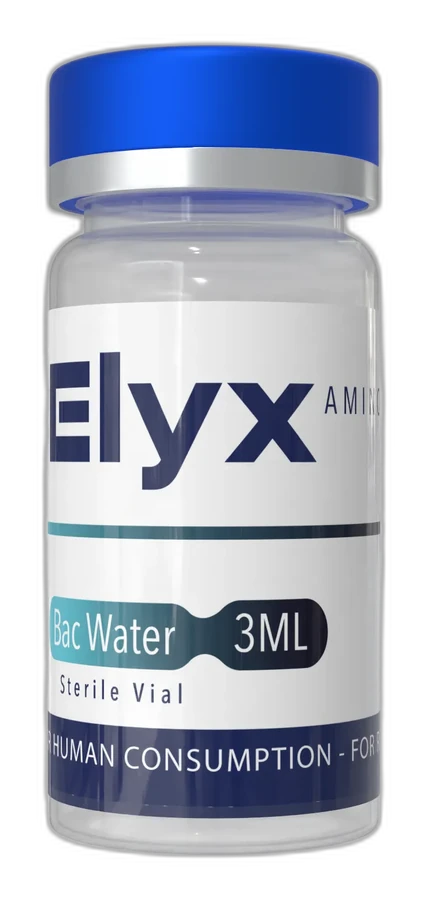 Bacteriostatic water 3 mLView in store
Store links may earn a commission. A supplier page is not scientific evidence or proof of suitability for human use.
Tirzepatide Vial and Research Context
- Reconstitute: add 1 mL of bacteriostatic water to produce 5 mg/mL.
- Frequency in the source: once weekly, subcutaneously.
- Described range: schedules run from 2.5 mg (2500 mcg) to 15 mg (15000 mcg) per injection.
- Easy measuring: 1 U-100 unit = 0.01 mL = 50 mcg.
- Vial size: the 5 mg label is total nominal content, not a per-injection amount.
- Vial coverage: at 2.5 mg (2500 mcg) per injection one vial supplies 2 injections; at 15 mg (15000 mcg) it supplies less than 1 (3 vials per injection). These are mass calculations, not storage periods.
Protocol Overview
Quick reference for the schedules shared by the cited literature.
- Frequency: once weekly.
- Concentration: 5 mg in 1 mL = 5 mg/mL.
- Unit conversion: 1 U-100 unit = 50 mcg.
Dosing Schedule
The tables keep each approach separate.
- Standard Weekly Escalation Schedule: 2.5 mg (2500 mcg), 5 mg (5000 mcg), 7.5 mg (7500 mcg), 10 mg (10000 mcg), 12.5 mg (12500 mcg), 15 mg (15000 mcg), in phases (once weekly).
- Measurement: use the units and mL shown beside each amount.
- Consistency: vial size does not change the schedule.
Storage Instructions
- Lyophilized (unopened): −20 °C for long-term storage; 2–8 °C if used within weeks. Protected from light.
- Reconstituted: 2–8 °C, do not freeze. Use within the documented period (typically up to 4 weeks with bacteriostatic water).
- Handling: do not shake; avoid temperature cycling; label with date and concentration.
- Discard: cloudy solutions, particulates or expired preparations are discarded.
More detail in the storage guide (Spanish).
Important Notes
- Research only: the referenced compounds are sold for laboratory research. Nothing here is medical advice or an administration schedule.
- Evidence: chart amounts come from published trials or approved prescribing information, cited in References.
- Above 100 units: a 1 mL U-100 syringe cannot hold them; split across syringes or reconstitute with less volume.
- Accuracy: concentration depends on the actual volume added; measure the diluent with a syringe, not by eye.
- Verification: confirm vial contents against the batch certificate of analysis before calculating.
How This Works
Tirzepatide represents a revolutionary advance as the first dual agonist of the GIP (Glucose-dependent Insulinotropic Polypeptide) and GLP-1 receptors. This 39-amino-acid synthetic peptide (MW: 4813 Da) integrates:
Molecular Architecture:
- Base sequence: native human GIP (amino acids 1-30)
- Ala² modification: substitution with 2-aminoisobutyric acid (DPP-4 stability)
- C20 acyl side chain at Lys²⁰ with gamma-Glu-OEG spacer
- Albumin binding: >99% (extended half-life)
Synergistic Dual Mechanisms:
GIP Pathway (GIP-R Receptor):
- Predominant expression: pancreatic β cells, adipocytes, brain
- Insulin secretion potentiation: 50-70% higher than GLP-1 alone
- Adipocyte lipolysis: activation via cAMP/PKA
- Neuroprotection: hippocampal and cortical expression
GLP-1 Pathway (GLP-1R Receptor):
- Glucose-dependent insulin secretion
- Central appetite suppression (arcuate/paraventricular nucleus)
- Gastric emptying delay (70-80%)
- Glucagon secretion inhibition
Distinctive Pharmacokinetics:
- SC Bioavailability: 80%
- Tmax: 8-72 hours (broad peak)
- Half-life: ~5 days (120 hours)
- Steady state: 4 weeks
- Elimination: proteolytic degradation + minimal renal excretion
Research Applications
Metabolic Superiority in Comparative Studies
SURPASS Studies (vs. Semaglutide):
- HbA1c reduction: 2.4% vs 1.9% with semaglutide (Frias et al., 2021)
- Weight loss: 15.7kg vs 12.4kg with semaglutide 1mg (maximum doses)
- Patients achieving HbA1c <5.7%: 51% vs. 20%
Advanced Body Recomposition:
- Visceral fat loss: 40-45% (greater than subcutaneous)
- Muscle mass preservation: 92-95% of loss is adipose tissue
- Improved hepatic composition: 50% reduction in liver fat (NASH)
Cardiovascular and Metabolic Effects
Cardiometabolic Biomarkers:
- Blood pressure reduction: 7-10 mmHg systolic
- Lipid profile: ↓ triglycerides 25%, ↑ HDL 8-12%
- Serum adiponectin: increase 35–50%
- Inflammatory markers: Reduced CRP 40%
Endothelial Function
- Improves endothelium-dependent vasodilation: 25-30%
- Reduction of oxidative stress: decrease in ROS 40%
- eNOS Expression: 50% Increase in Vascular Models
Neuroscience and Cognitive Function
Dual Neuroprotection (GIP + GLP-1)
- Reduction of cerebral β-amyloid: 45% in Alzheimer's disease models (Cai et al., 2022)
- Prevention of Synaptic Loss: 60% vs. Controls
- Hippocampal neurogenesis: 55% increase (greater than GLP-1 alone)
- Improves spatial memory: 40% in Morris Water Maze tests
Injection Technique in Research
- Route in the studies: subcutaneous, in abdominal or thigh adipose tissue, rotating the site.
- Syringe: 1 mL U-100 (100 units); read in units, not mL.
- Asepsis: alcohol swab on the stopper and the site; a new syringe per injection.
- Drawing: purge air, draw the units from the chart and verify before withdrawing the needle from the vial.
Full guide: U-100 syringes and reading units (Spanish).
Research FAQ
Why does tirzepatide outperform single GLP-1 agonists? A: Dual GIP/GLP-1 activation produces a synergistic effect: GIP enhances insulin secretion and lipolysis, while GLP-1 maximizes satiety and glycemic control, resulting in 30-40% superior effects.
Q: Is it appropriate for fatty liver disease models? A: Excellent for NAFLD/NASH: reduces steatosis (50%), improves ALT/AST levels (35%), and reduces hepatic fibrosis as determined by histology (Hartman et al., 2020).
Optimal protocol for body composition studies? A: DEXA or baseline MRI and at weeks 4, 8, 12, and 16; abdominal circumference measurements every two weeks; plasma metabolomic analysis every 4 weeks.
P: Interactions with basal insulin research? A: Compatible and synergistic; it allows for a reduction in insulin dosage by 40-50% while maintaining glycemic control, with fewer episodes of hypoglycemia.
Research Note
All content on this page is technical and educational. It describes how a vial is reconstituted, how a syringe is read and which amounts the cited sources describe. It does not replace the supervision of a qualified researcher or the judgment of a health professional, and it is not intended to diagnose, treat, cure or prevent any disease.
References
- Jastreboff AM et al. N Engl J Med 2022;387(3):205-216. PMID 35658024
- Frias JP, et al. (2021) “Tirzepatide Versus Semaglutide Once Weekly in Patients With Type 2 Diabetes” – The New England Journal of Medicine 385(6):503-515. [PubMed: 34170647]
- Rosenstock J, et al. (2021) “Efficacy and safety of once-weekly tirzepatide” – Lancet 398(10295):143-155. [PubMed: 34186022]
- Cai HY, et al. (2022) “Dual GIP/GLP-1 receptor agonist in Alzheimer’s disease models” – Neuropharmacology 210:109023. [PubMed: 35364126]
- Hartman ML, et al. (2020) “Effects of novel dual GIP and GLP-1 receptor agonist tirzepatide on biomarkers of nonalcoholic steatohepatitis” – Hepatology 71(4):1222-1232. [PubMed: 31625611]
- Eli Lilly Research (2022) “Tirzepatide: A novel dual GIP and GLP-1 receptor agonist” – Cell Metabolism 33(7):1284-1295.