Tirzepatide Quick Reference (10 mg vial)
Research context: mechanisms, human and preclinical evidence, limitations and precautions are in How this works and References. The calculator (Spanish) converts any other volume.
Tirzepatide Dosage Chart (10 mg vial)
Dosing & Reconstitution Guide
Educational guide for reconstitution and weekly dosing
Standard Weekly Escalation Schedule (2 mL = ~5 mg/mL)
| Study phase | Weekly dose | Units per injection (mL) |
|---|---|---|
| Weeks 1 to 4 | 2.5 mg (2500 mcg) | 50 units (0.50 mL) |
| Weeks 5 to 8 | 5 mg (5000 mcg) | 100 units (1.00 mL) |
| Weeks 9 to 12 | 7.5 mg (7500 mcg) | Split: 2 × 75 units (0.75 mL each) |
| Weeks 13 to 16 | 10 mg (10000 mcg) | Split: 2 × 100 units (1.00 mL each) |
| Weeks 17 to 20 | 12.5 mg (12500 mcg) | Split: 3 × 83.3 units (0.83 mL each) |
| Weeks 21+ | 15 mg (15000 mcg) | Split: 3 × 100 units (1.00 mL each) |
Frequency: Once weekly, subcutaneously, at a consistent time. Rows above 100 units exceed a 1 mL syringe: they are split across injections and the supply calculation counts each syringe.
Reconstitution Steps
- Draw 2 mL of bacteriostatic water with a sterile syringe.1
- Inject slowly down the vial wall; avoid shaking to prevent foaming.2
- Gently swirl or roll until fully dissolved (clear solution).3
- Label with the reconstitution date and refrigerate at 2–8 °C, protected from light; use within 4 weeks.4
The per-phase amounts are identical across the Tirzepatide family. The 10 mg vial only changes the concentration, U-100 units, volume and supplies.
Important: this guide is for educational purposes only and is not medical advice. For research use only. Not for human consumption.
U-100 Conversion Table (2 mL = 5 mg/mL)
| U-100 units | Volume | Contains | Yield per vial |
|---|---|---|---|
| 2 | 0.02 mL | 100 mcg | 100 injections |
| 5 | 0.05 mL | 250 mcg | 40 injections |
| 10 | 0.10 mL | 500 mcg | 20 injections |
| 20 | 0.20 mL | 1 mg (1000 mcg) | 10 injections |
| 30 | 0.30 mL | 1.5 mg (1500 mcg) | 6 injections |
| 50 | 0.50 mL | 2.5 mg (2500 mcg) | 4 injections |
| 100 | 1.00 mL | 5 mg (5000 mcg) | 2 injections |
This section describes which dose a study or reference source used and what it measured. It is not a recommendation or an administration schedule. A trial dose belongs to its population, duration and supervision and does not transfer to anyone outside that context.
Supplies Needed
Straightforward 12- and 24-week planning for a 10 mg vial at 5 mg/mL.
Tirzepatide vials (10 mg each)
- Standard Weekly Escalation Schedule, 12 weeks: Minimum 6 vials (60 mg required).
- Standard Weekly Escalation Schedule, 24 weeks: Minimum 21 vials (210 mg required).
U-100 syringes (1 mL)
- Standard Weekly Escalation Schedule, 12 weeks: 16 new syringes for 12 injections.
- Standard Weekly Escalation Schedule, 24 weeks: 48 new syringes for 24 injections.
Bacteriostatic water
- Standard Weekly Escalation Schedule, 12 weeks: 12 mL total (2 mL per vial) → 4 × 3 mL vials.
- Standard Weekly Escalation Schedule, 24 weeks: 42 mL total (2 mL per vial) → 14 × 3 mL vials.
Alcohol swabs
- Standard Weekly Escalation Schedule, 12 weeks: 32 minimum; one box of 100 covers the calculation.
- Standard Weekly Escalation Schedule, 24 weeks: 96 minimum; one box of 100 covers the calculation.
Sharps container: one appropriately sized. Stability planning: totals are minimum arithmetic quantities; follow the product documentation for sterility, storage, handling loss and discard timing.
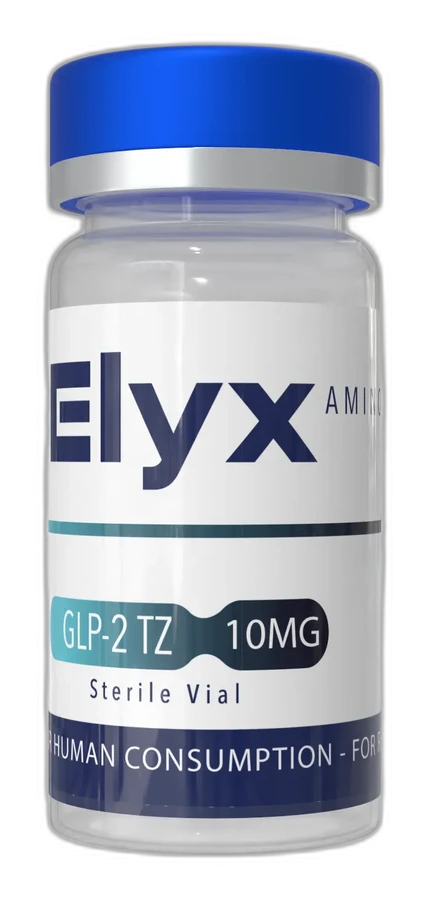
Tirzepatide 10mgView in store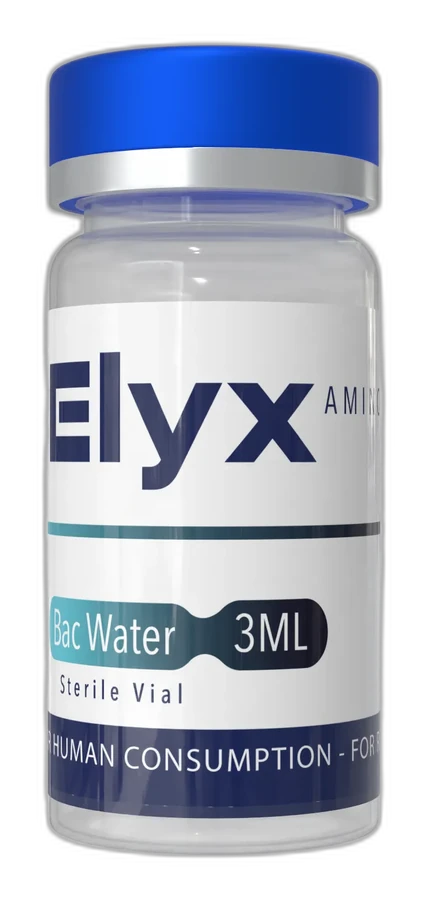 Bacteriostatic water 3 mLView in store
Store links may earn a commission. A supplier page is not scientific evidence or proof of suitability for human use.
Tirzepatide Vial and Research Context
- Reconstitute: add 2 mL of bacteriostatic water to produce 5 mg/mL.
- Frequency in the source: once weekly, subcutaneously.
- Described range: schedules run from 2.5 mg (2500 mcg) to 15 mg (15000 mcg) per injection.
- Easy measuring: 1 U-100 unit = 0.01 mL = 50 mcg.
- Vial size: the 10 mg label is total nominal content, not a per-injection amount.
- Vial coverage: at 2.5 mg (2500 mcg) per injection one vial supplies 4 injections; at 15 mg (15000 mcg) it supplies less than 1 (2 vials per injection). These are mass calculations, not storage periods.
Protocol Overview
Quick reference for the schedules shared by the cited literature.
- Frequency: once weekly.
- Concentration: 10 mg in 2 mL = 5 mg/mL.
- Unit conversion: 1 U-100 unit = 50 mcg.
Dosing Schedule
The tables keep each approach separate.
- Standard Weekly Escalation Schedule: 2.5 mg (2500 mcg), 5 mg (5000 mcg), 7.5 mg (7500 mcg), 10 mg (10000 mcg), 12.5 mg (12500 mcg), 15 mg (15000 mcg), in phases (once weekly).
- Measurement: use the units and mL shown beside each amount.
- Consistency: vial size does not change the schedule.
Storage Instructions
- Lyophilized (unopened): −20 °C for long-term storage; 2–8 °C if used within weeks. Protected from light.
- Reconstituted: 2–8 °C, do not freeze. Use within the documented period (typically up to 4 weeks with bacteriostatic water).
- Handling: do not shake; avoid temperature cycling; label with date and concentration.
- Discard: cloudy solutions, particulates or expired preparations are discarded.
More detail in the storage guide (Spanish).
Important Notes
- Research only: the referenced compounds are sold for laboratory research. Nothing here is medical advice or an administration schedule.
- Evidence: chart amounts come from published trials or approved prescribing information, cited in References.
- Above 100 units: a 1 mL U-100 syringe cannot hold them; split across syringes or reconstitute with less volume.
- Accuracy: concentration depends on the actual volume added; measure the diluent with a syringe, not by eye.
- Verification: confirm vial contents against the batch certificate of analysis before calculating.
How This Works
Tirzepatide simultaneously activates two incretin pathways that normally operate in a coordinated manner in post-prandial physiology:
GLP-1 Pathway:
- Increases glucose-dependent insulin secretion from pancreatic beta cells
- Suppresses glucagon secretion from alpha cells
- Delays gastric emptying, prolonging post-meal satiety
- Acts on hypothalamic nuclei (arcuate, paraventricular) modulating appetite
GIP Pathway:
- Potentiates GLP-1-induced insulin secretion
- Modulates lipid metabolism in adipose tissue
- Improves nutrient partitioning toward oxidation vs storage
- Reduces low-grade inflammation in visceral adipose tissue
The combination produces a documented synergistic effect: simultaneous activation of both receptors generates a greater metabolic response than the sum of each component separately, especially in terms of fat mass loss with relative preservation of lean mass.
Research Applications
The compound is widely investigated in the following contexts:
- Obesity Research: SURMOUNT-1 through SURMOUNT-4 reported an average reduction in body weight of 15 to 22% at 72 weeks with doses of 10 to 15 mg/week
- Type 2 diabetes SURPASS-1 to SURPASS-5 established HbA1c reductions greater than those observed with Semaglutide
- Fatty liver disease Phase 2 trials show significant reduction in liver lipid content
- Hypertension associated with obesity: average reductions of 6 to 8 mmHg in systolic pressure
- Sleep apnea: SURMOUNT-OSA showed improvement in the apnea-hypopnea index
- Cardiovascular Research: SURPASS-CVOT ongoing evaluating major outcomes
Precautions Described in the Literature
Adverse events commonly reported in clinical trial literature:
- Gastrointestinal: nausea (20-30%), diarrhea, constipation, dyspepsia
- Decreased appetite
Less common but relevant events reported in the literature: acute pancreatitis (rare), hypersensitivity reactions, cholelithiasis associated with rapid weight loss.
Documented contraindications in clinical literature:
- Personal or family history of medullary thyroid carcinoma
- Multiple Endocrine Neoplasia Type 2 (MEN 2) Syndrome
- Active pancreatitis or history of severe pancreatitis
- Pregnancy and breastfeeding
Relevant documented drug interactions: delayed gastric emptying may alter the absorption of oral contraceptives and other gastric rate-sensitive drugs.
Studied Combinations
Tirzepatide is frequently studied alongside other compounds in research protocols depending on the study objective:
- Body recomposition Tirzepatide + CJC No DAC + Ipamorelin, investigated for its association with lean mass preservation during fat loss
- Fatty liver disease Tirzepatide + MOTS-C, studied for its association with mitochondrial lipid oxidation
- Metabolic Syndrome Tirzepatide + Semaglutide in crossover studies (not simultaneous)
- Leather support Tirzepatide + GHK-Cu, investigated in contexts of skin laxity associated with weight loss
- Pre-operative optimization Low-dose tirzepatide in pre-bariatric optimization research
Injection Technique in Research
- Route in the studies: subcutaneous, in abdominal or thigh adipose tissue, rotating the site.
- Syringe: 1 mL U-100 (100 units); read in units, not mL.
- Asepsis: alcohol swab on the stopper and the site; a new syringe per injection.
- Drawing: purge air, draw the units from the chart and verify before withdrawing the needle from the vial.
Full guide: U-100 syringes and reading units (Spanish).
Research Note
All content on this page is technical and educational. It describes how a vial is reconstituted, how a syringe is read and which amounts the cited sources describe. It does not replace the supervision of a qualified researcher or the judgment of a health professional, and it is not intended to diagnose, treat, cure or prevent any disease.
References
- Jastreboff AM et al. N Engl J Med 2022;387(3):205-216. PMID 35658024
- Coskun T, Sloop KW, Loghin C, et al. LY3298176, a novel dual GIP and GLP-1 receptor agonist for the treatment of type 2 diabetes mellitus. Mol Metab. 2018;18:3-14.
- Jastreboff AM, Aronne LJ, Ahmad NN, et al. Tirzepatide once weekly for the treatment of obesity. N Engl J Med. 2022;387(3):205-216.
- Frías JP, Davies MJ, Rosenstock J, et al. Tirzepatide versus semaglutide once weekly in patients with type 2 diabetes. N Engl J Med. 2021;385(6):503-515.
- Rosenstock J, Wysham C, Frías JP, et al. Efficacy and safety of tirzepatide in patients with type 2 diabetes (SURPASS-1). Lancet. 2021;398(10295):143-155.
- Malhotra A, Grunstein RR, Fietze I, et al. Tirzepatide for the treatment of obstructive sleep apnea and obesity (SURMOUNT-OSA). N Engl J Med. 2024;391(13):1193-1205.