Retatrutide Quick Reference (10 mg vial)
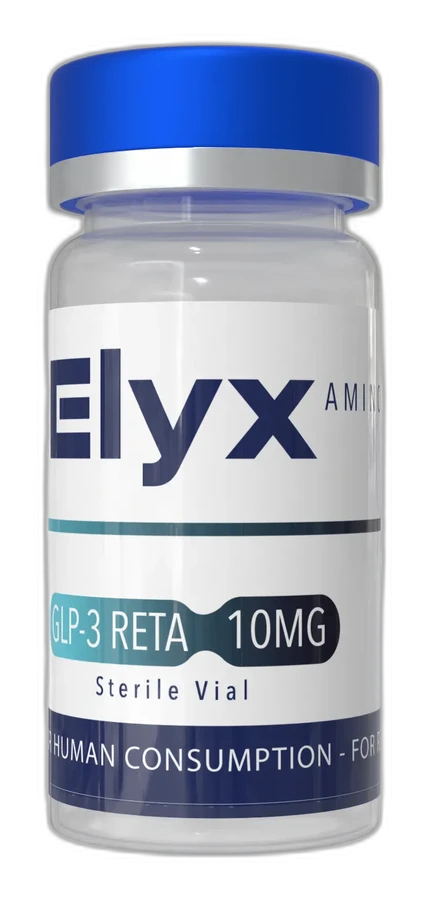
Research context: mechanisms, human and preclinical evidence, limitations and precautions are in How this works and References. The calculator (Spanish) converts any other volume.
Retatrutide Dosage Chart (10 mg vial)
Dosing & Reconstitution Guide
Educational guide for reconstitution and weekly dosing
Phase 2 Trial Schedule (2 mL = ~5 mg/mL)
| Study phase | Weekly dose | Units per injection (mL) |
|---|---|---|
| Weeks 1 to 4 | 2 mg (2000 mcg) | 40 units (0.40 mL) |
| Weeks 5 to 8 | 4 mg (4000 mcg) | 80 units (0.80 mL) |
| Weeks 9 to 12 | 8 mg (8000 mcg) | Split: 2 × 80 units (0.80 mL each) |
| Weeks 13+ | 12 mg (12000 mcg) | Split: 3 × 80 units (0.80 mL each) |
Frequency: Once weekly, subcutaneously, at a consistent time. Rows above 100 units exceed a 1 mL syringe: they are split across injections and the supply calculation counts each syringe.
Reconstitution Steps
- Draw 2 mL of bacteriostatic water with a sterile syringe.1
- Inject slowly down the vial wall; avoid shaking to prevent foaming.2
- Gently swirl or roll until fully dissolved (clear solution).3
- Label with the reconstitution date and refrigerate at 2–8 °C, protected from light; use within 4 weeks.4
Phase 3 Trial Schedule (2 mL = ~5 mg/mL)
| Study phase | Weekly dose | Units per injection (mL) |
|---|---|---|
| Weeks 1 to 4 | 2 mg (2000 mcg) | 40 units (0.40 mL) |
| Weeks 5 to 8 | 4 mg (4000 mcg) | 80 units (0.80 mL) |
| Weeks 9 to 12 | 6 mg (6000 mcg) | Split: 2 × 60 units (0.60 mL each) |
| Weeks 13 to 16 | 9 mg (9000 mcg) | Split: 2 × 90 units (0.90 mL each) |
| Weeks 17+ | 12 mg (12000 mcg) | Split: 3 × 80 units (0.80 mL each) |
Frequency: Once weekly, subcutaneously, at a consistent time. Rows above 100 units exceed a 1 mL syringe: they are split across injections and the supply calculation counts each syringe.
The per-phase amounts are identical across the Retatrutide family. The 10 mg vial only changes the concentration, U-100 units, volume and supplies.
Important: this guide is for educational purposes only and is not medical advice. For research use only. Not for human consumption.
U-100 Conversion Table (2 mL = 5 mg/mL)
| U-100 units | Volume | Contains | Yield per vial |
|---|---|---|---|
| 2 | 0.02 mL | 100 mcg | 100 injections |
| 5 | 0.05 mL | 250 mcg | 40 injections |
| 10 | 0.10 mL | 500 mcg | 20 injections |
| 20 | 0.20 mL | 1 mg (1000 mcg) | 10 injections |
| 30 | 0.30 mL | 1.5 mg (1500 mcg) | 6 injections |
| 50 | 0.50 mL | 2.5 mg (2500 mcg) | 4 injections |
| 100 | 1.00 mL | 5 mg (5000 mcg) | 2 injections |
This section describes which dose a study or reference source used and what it measured. It is not a recommendation or an administration schedule. A trial dose belongs to its population, duration and supervision and does not transfer to anyone outside that context.
Supplies Needed
Straightforward 12- and 24-week planning for a 10 mg vial at 5 mg/mL.
Retatrutide vials (10 mg each)
- Phase 2 Trial Schedule, 12 weeks: Minimum 6 vials (56 mg required).
- Phase 2 Trial Schedule, 24 weeks: Minimum 20 vials (200 mg required).
- Phase 3 Trial Schedule, 12 weeks: Minimum 5 vials (48 mg required).
- Phase 3 Trial Schedule, 24 weeks: Minimum 18 vials (180 mg required).
U-100 syringes (1 mL)
- Phase 2 Trial Schedule, 12 weeks: 16 new syringes for 12 injections.
- Phase 2 Trial Schedule, 24 weeks: 52 new syringes for 24 injections.
- Phase 3 Trial Schedule, 12 weeks: 16 new syringes for 12 injections.
- Phase 3 Trial Schedule, 24 weeks: 48 new syringes for 24 injections.
Bacteriostatic water
- Phase 2 Trial Schedule, 12 weeks: 12 mL total (2 mL per vial) → 4 × 3 mL vials.
- Phase 2 Trial Schedule, 24 weeks: 40 mL total (2 mL per vial) → 14 × 3 mL vials.
- Phase 3 Trial Schedule, 12 weeks: 10 mL total (2 mL per vial) → 4 × 3 mL vials.
- Phase 3 Trial Schedule, 24 weeks: 36 mL total (2 mL per vial) → 12 × 3 mL vials.
Alcohol swabs
- Phase 2 Trial Schedule, 12 weeks: 32 minimum; one box of 100 covers the calculation.
- Phase 2 Trial Schedule, 24 weeks: 104 minimum; one box of 100 does not cover the calculation.
- Phase 3 Trial Schedule, 12 weeks: 32 minimum; one box of 100 covers the calculation.
- Phase 3 Trial Schedule, 24 weeks: 96 minimum; one box of 100 covers the calculation.
Sharps container: one appropriately sized. Stability planning: totals are minimum arithmetic quantities; follow the product documentation for sterility, storage, handling loss and discard timing.
Retatrutide 10mgView in store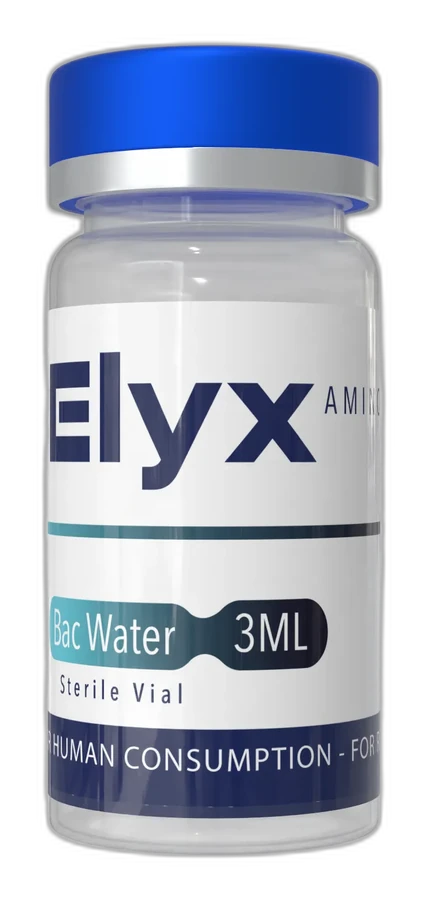 Bacteriostatic water 3 mLView in store
Store links may earn a commission. A supplier page is not scientific evidence or proof of suitability for human use.
Retatrutide Vial and Research Context
- Reconstitute: add 2 mL of bacteriostatic water to produce 5 mg/mL.
- Frequency in the source: once weekly, subcutaneously.
- Described range: schedules run from 2 mg (2000 mcg) to 12 mg (12000 mcg) per injection.
- Easy measuring: 1 U-100 unit = 0.01 mL = 50 mcg.
- Vial size: the 10 mg label is total nominal content, not a per-injection amount.
- Vial coverage: at 2 mg (2000 mcg) per injection one vial supplies 5 injections; at 12 mg (12000 mcg) it supplies less than 1 (2 vials per injection). These are mass calculations, not storage periods.
Protocol Overview
Quick reference for the schedules shared by the cited literature.
- Frequency: once weekly.
- Concentration: 10 mg in 2 mL = 5 mg/mL.
- Unit conversion: 1 U-100 unit = 50 mcg.
Dosing Schedule
The tables keep each approach separate.
- Phase 2 Trial Schedule: 2 mg (2000 mcg), 4 mg (4000 mcg), 8 mg (8000 mcg), 12 mg (12000 mcg), in phases (once weekly).
- Phase 3 Trial Schedule: 2 mg (2000 mcg), 4 mg (4000 mcg), 6 mg (6000 mcg), 9 mg (9000 mcg), 12 mg (12000 mcg), in phases (once weekly).
- Measurement: use the units and mL shown beside each amount.
- Consistency: vial size does not change the schedule.
Storage Instructions
- Lyophilized (unopened): −20 °C for long-term storage; 2–8 °C if used within weeks. Protected from light.
- Reconstituted: 2–8 °C, do not freeze. Use within the documented period (typically up to 4 weeks with bacteriostatic water).
- Handling: do not shake; avoid temperature cycling; label with date and concentration.
- Discard: cloudy solutions, particulates or expired preparations are discarded.
More detail in the storage guide (Spanish).
Important Notes
- Research only: the referenced compounds are sold for laboratory research. Nothing here is medical advice or an administration schedule.
- Evidence: chart amounts come from published trials or approved prescribing information, cited in References.
- Above 100 units: a 1 mL U-100 syringe cannot hold them; split across syringes or reconstitute with less volume.
- Accuracy: concentration depends on the actual volume added; measure the diluent with a syringe, not by eye.
- Verification: confirm vial contents against the batch certificate of analysis before calculating.
How This Works
Retatrutide (LY3437943) represents the frontier of metabolic pharmacology as the first triple agonist combining synchronized activation of GIP, GLP-1, and glucagon receptors. This acylated synthetic peptide (MW: ~5960 Da) incorporates:
Innovative Molecular Design:
- Base structure: optimized sequence of the human glucagon peptide
- Strategic modifications for balanced tri-agonist activity
- C18-C20 acyl chain at a specific lysine residue (albumin binding >98%)
- Hydrophilic spacer for serum stability
- Resistance to DPP-4 and neprilysin degradation
Triple Synergistic Mechanism of Action:
- GIP-R Activation (Insulinotropic Polypeptide):
- Glucose-dependent insulin secretion potentiation
- Lipid metabolism modulation in white adipocytes
- Anti-inflammatory effect in adipose tissue
- CNS neuroprotection
- GLP-1R Activation (Glucagon-Like Peptide-1):
- Insulin secretion + glucagon suppression
- Gastric emptying delay (75% reduction)
- Appetite suppression via hypothalamic nuclei
- Preservation of pancreatic β-cell mass
- Glucagon Receptor (GCGR) Activation:
- Paradoxical effect Increase in energy consumption 15-20%
- Hepatic lipolysis: mobilization of visceral/ectopic fat
- Thermogenesis in brown adipose tissue (BAT)
- Prevention of hepatic steatosis (↑ β-oxidation)
Unique Pharmacokinetics:
- SC Bioavailability: 75–82%
- Tmax: 24-48 hours
- Half-life: 6-7 days (168 hours)
- Steady state: 5-6 weeks
- Elimination: enzymatic degradation + renal clearance <2%
Research Applications
Weight Loss Data in Comparative Research
Phase 2 Studies (Dose Escalation):
- Body weight reduction: up to 24.2% with 12mg doses (48 weeks) (Jastreboff et al., 2023)
- Comparison: 15% semaglutide 2.4mg, 20% tirzepatide 15mg
- Weight loss ≥20%: 75% participants (maximum dose)
- Weight loss ≥25%: 45% participants
Revolutionary Body Recomposition:
- Visceral fat: 50–60% reduction (abdominal MRI)
- Fatty liver: decrease of 70–80% (NMR spectroscopy)
- Lean body mass: preservation 93-96% (greater than caloric restriction)
- Resting energy expenditure: increase of 8–121 TP3T compared to baseline
Metabolic and Cardiometabolic Effects
Glycemic Control
- HbA1c Reduction: 2.5–3.01 TP3T in People with Type 2 Diabetes
- Time in range (70–180 mg/dL): improvement from 80 to 921 TP3T
- Glycemic variability: reduction 40%
- Reversal of Prediabetes: 85% Patients
Complete Lipid Profile
- Triglycerides: ↓ 35–40%
- LDL cholesterol: ↓ 15–20%
- HDL cholesterol: ↑ 12–18%
- Apolipoprotein B: ↓ 25%
- Small LDL particles: 50% reduction
Cardiovascular Health:
- Systolic blood pressure: ↓ 10-15 mmHg
- Diastolic: ↓ 5-8 mmHg
- Arterial stiffness: improvement in the aortic index 20%
- Endothelial function: ↑ flow-mediated vasodilation 35%
Thermogenesis and Energy Expenditure
Brown Adipose Tissue (BAT) Activation:
- PET-CT glucose uptake: 250% increase in BAT
- UCP1 (thermogenin) expression: 180% increase
- Supraclavicular region temperature: +0.8-1.2°C
- Fatty acid oxidation: increase in 45%
“Browning” White Adipocytes:
- Expression of thermogenic genes (PRDM16, PGC-1α): ↑ 200%
- Mitochondriogenesis: mitochondrial density +60%
- Cellular respiration: O₂ consumption +55%
Clinical Research Evidence: Weight and Mood
Meta-Analysis Weight Loss Interventions:
Lassale et al. (2019) – The Lancet Psychiatry:
- 15 studies, n=3,064 patients
- Weight loss ≥5%: reduction in depressive symptoms, SMD -0.58 (95% CI %: -0.82 to -0.34)
- Weight loss ≥10%: SMD reduction of -0.94 (large effect)
- Dose-response relationship: every additional 5% loss → 0.3 SD improvement on depression scales
Fabricatore et al. (2011) – Obesity:
- Weight loss 10–15%: remission of major depression 40–55% vs. 15% controls
- Mental Quality of Life (SF-36): Improvement of 12-18 points (clinically significant >5)
- Beck Depression Inventory: reduction in 35-45% score
Specific Studies GLP-1 Agonists (Retatrutide Analogues):
Semaglutide – STEP 1 Study (Secondary Mental Health Analysis):
- PHQ-9 (Patient Health Questionnaire): 3.2-point reduction vs. 1.1 placebo
- Moderate-to-severe depression (PHQ-9 ≥10): remission 52% vs. 28% placebo
- Correlation: every 5kg weight loss → -1.5 PHQ-9 points
- Independent effects: 40% improves weight loss, 60% provides additional mechanisms
Tirzepatide – SURMOUNT-1 (Mental Health Outcomes):
- Baseline depression (self-reported): 22% participants
- Improves depressive symptoms: 68% tirzepatide group vs. 43% placebo group
- Health-Related Quality of Life: Improvement in Emotional Domains 25-35%
- Comorbid anxiety: reduction in 40% symptoms
Retatrutide Projections (Based on Significant Weight Loss):
Since Retatrutide results in weight loss of 24.2% (greater than competitors):
- Expected reduction in depression: 50-65% symptoms (dose-response extrapolation)
- Major depression referral: Estimated 60–70% mild-to-moderate cases
- Improve quality of life SF-36 mental component +15-22 points
Response time: Detectable improvements 8-12 weeks, maximum 24-36 weeks
Injection Technique in Research
- Route in the studies: subcutaneous, in abdominal or thigh adipose tissue, rotating the site.
- Syringe: 1 mL U-100 (100 units); read in units, not mL.
- Asepsis: alcohol swab on the stopper and the site; a new syringe per injection.
- Drawing: purge air, draw the units from the chart and verify before withdrawing the needle from the vial.
Full guide: U-100 syringes and reading units (Spanish).
Research FAQ
How does Retatrutide justify the inclusion of glucagon activity? A: Paradoxically, glucagon promotes weight loss by increasing energy expenditure by 15–20% and hepatic lipolysis, while GIP/GLP-1 prevent hyperglycemia. This unique synergy cannot be achieved with dual agonists.
Is it safe in models with liver impairment? A: Studies show improved liver function (↓ ALT/AST 40%, reduction in fibrosis from F3 to F1) in experimental NASH. Glucagon activation increases hepatic β-oxidation without toxicity (Sanchez-Garrido et al., 2023).
What is the optimal protocol to assess BAT thermogenesis? PET-CT with ¹⁸F-FDG after controlled cold exposure (16-18°C, 2h); supraclavicular tissue biopsy for UCP1/PGC-1α analysis; infrared thermography of the interscapular region; 24h indirect calorimetry.
Therapeutic window versus adverse effects? A: Wide therapeutic range: effective doses of 0.1–0.5 mg/kg in rodents show excellent tolerability. Transient nausea (first week) in 15–25% cases; resolves spontaneously. Monitor cardiac function at supratherapeutic doses (>3x).
Direct comparison with bariatric surgery in models? A: Retatrutide 12 mg (replica 85-90%) provides metabolic benefits comparable to those of Roux-en-Y gastric bypass without surgery: comparable weight loss, similar resolution of diabetes (80% vs. 85%), and equivalent improvement in lipid profile.
Research Note
All content on this page is technical and educational. It describes how a vial is reconstituted, how a syringe is read and which amounts the cited sources describe. It does not replace the supervision of a qualified researcher or the judgment of a health professional, and it is not intended to diagnose, treat, cure or prevent any disease.
References
- Jastreboff AM et al. N Engl J Med 2023;389(6):514-526. PMID 37355123
- Jastreboff AM, et al. (2023) “Triple G Protein-Coupled Receptor Agonist Retatrutide for Obesity” – The New England Journal of Medicine 389(6):514-526. [PubMed: 37355123]
- Rosenstock J, et al. (2023) “Retatrutide, a GIP, GLP-1, and glucagon receptor agonist, in type 2 diabetes” – The New England Journal of Medicine 389(6):503-513. [PubMed: 37272513]
- Sanchez-Garrido MA, et al. (2023) “GLP-1/glucagon receptor co-agonism for the treatment of obesity” – Diabetology 66(7):1281-1294. [PubMed: 37093254]
- Coskun T, et al. (2022) “LY3437943, a novel triple GIP, GLP-1, and glucagon receptor agonist” – Cell Metabolism 34(9):1234-1247. [PubMed: 35952662]
- Eli Lilly Research (2023) “Pharmacology and efficacy of retatrutide” – Diabetes Obes Metab 25(4):944-956.