IGF-1 LR3 Quick Reference (1 mg vial)
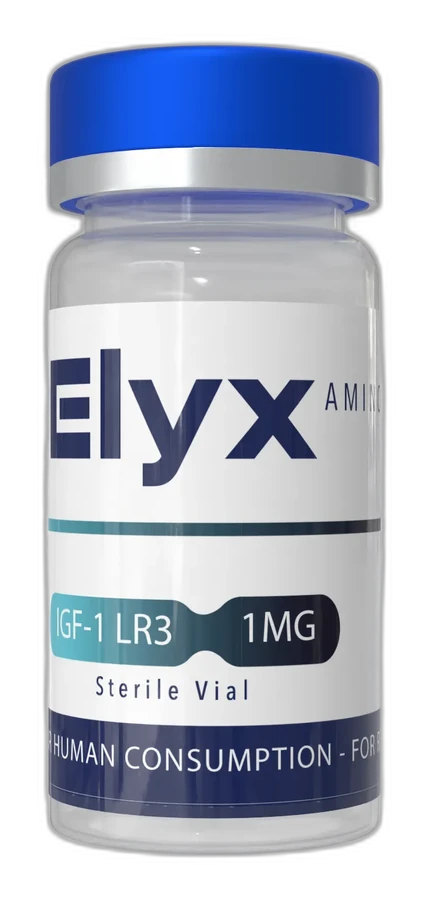
Research context: mechanisms, human and preclinical evidence, limitations and precautions are in How this works and References. The calculator (Spanish) converts any other volume.
IGF-1 LR3 Dosage Chart (1 mg vial)
Dosing & Reconstitution Guide
Educational guide for reconstitution and daily dosing
Standard / Gradual Approach (1 mL = ~1 mg/mL)
| Week / phase | Daily dose | Units per injection (mL) |
|---|---|---|
| Weeks 1–2 | 20 mcg | 2 units (0.02 mL) |
| Weeks 3–4 | 40 mcg | 4 units (0.04 mL) |
| Weeks 5–8 | 50 mcg | 5 units (0.05 mL) |
Frequency: Once daily, subcutaneously, at a consistent time.
Reconstitution Steps
- Draw 1 mL of bacteriostatic water with a sterile syringe.1
- Inject slowly down the vial wall; avoid shaking to prevent foaming.2
- Gently swirl or roll until fully dissolved (clear solution).3
- Label with the reconstitution date and refrigerate at 2–8 °C, protected from light; use within 4 weeks.4
Important: this guide is for educational purposes only and is not medical advice. For research use only. Not for human consumption.
U-100 Conversion Table (1 mL = 1 mg/mL)
| U-100 units | Volume | Contains | Yield per vial |
|---|---|---|---|
| 2 | 0.02 mL | 20 mcg | 50 injections |
| 5 | 0.05 mL | 50 mcg | 20 injections |
| 10 | 0.10 mL | 100 mcg | 10 injections |
| 20 | 0.20 mL | 200 mcg | 5 injections |
| 30 | 0.30 mL | 300 mcg | 3 injections |
| 50 | 0.50 mL | 500 mcg | 2 injections |
| 100 | 1.00 mL | 1 mg (1000 mcg) | 1 injection |
This section describes which dose a study or reference source used and what it measured. It is not a recommendation or an administration schedule. A trial dose belongs to its population, duration and supervision and does not transfer to anyone outside that context.
Supplies Needed
Straightforward 12- and 24-week planning for a 1 mg vial at 1 mg/mL.
IGF-1 LR3 vials (1 mg each)
- Standard / Gradual Approach, 12 weeks: Minimum 4 vials (3.64 mg required).
- Standard / Gradual Approach, 24 weeks: Minimum 8 vials (7.84 mg required).
U-100 syringes (1 mL)
- Standard / Gradual Approach, 12 weeks: 84 new syringes for 84 injections.
- Standard / Gradual Approach, 24 weeks: 168 new syringes for 168 injections.
Bacteriostatic water
- Standard / Gradual Approach, 12 weeks: 4 mL total (1 mL per vial) → 2 × 3 mL vials.
- Standard / Gradual Approach, 24 weeks: 8 mL total (1 mL per vial) → 3 × 3 mL vials.
Alcohol swabs
- Standard / Gradual Approach, 12 weeks: 168 minimum; one box of 100 does not cover the calculation.
- Standard / Gradual Approach, 24 weeks: 336 minimum; one box of 100 does not cover the calculation.
Sharps container: one appropriately sized. Stability planning: totals are minimum arithmetic quantities; follow the product documentation for sterility, storage, handling loss and discard timing.
IGF-1 LR3 1mgView in store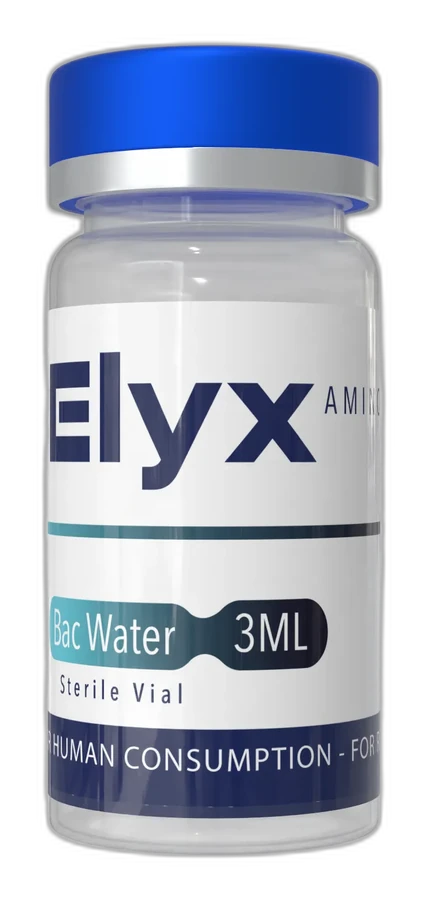 Bacteriostatic water 3 mLView in store
Store links may earn a commission. A supplier page is not scientific evidence or proof of suitability for human use.
IGF-1 LR3 Vial and Research Context
- Reconstitute: add 1 mL of bacteriostatic water to produce 1 mg/mL.
- Frequency in the source: once daily, subcutaneously.
- Described range: schedules run from 20 mcg to 50 mcg per injection.
- Easy measuring: 1 U-100 unit = 0.01 mL = 10 mcg.
- Vial size: the 1 mg label is total nominal content, not a per-injection amount.
- Vial coverage: at 20 mcg per injection one vial supplies 50 injections; at 50 mcg it supplies 20. These are mass calculations, not storage periods.
Protocol Overview
Quick reference for the schedules shared by the cited literature.
- Frequency: once daily.
- Concentration: 1 mg in 1 mL = 1 mg/mL.
- Unit conversion: 1 U-100 unit = 10 mcg.
Dosing Schedule
The tables keep each approach separate.
- Standard / Gradual Approach: 20 mcg, 40 mcg, 50 mcg, in phases (once daily).
- Measurement: use the units and mL shown beside each amount.
Storage Instructions
- Lyophilized (unopened): −20 °C for long-term storage; 2–8 °C if used within weeks. Protected from light.
- Reconstituted: 2–8 °C, do not freeze. Use within the documented period (typically up to 4 weeks with bacteriostatic water).
- Handling: do not shake; avoid temperature cycling; label with date and concentration.
- Discard: cloudy solutions, particulates or expired preparations are discarded.
More detail in the storage guide (Spanish).
Important Notes
- Research only: the referenced compounds are sold for laboratory research. Nothing here is medical advice or an administration schedule.
- Above 100 units: a 1 mL U-100 syringe cannot hold them; split across syringes or reconstitute with less volume.
- Accuracy: concentration depends on the actual volume added; measure the diluent with a syringe, not by eye.
- Verification: confirm vial contents against the batch certificate of analysis before calculating.
How This Works
IGF-1 LR3 (Long-R3 Insulin-like Growth Factor 1) is a synthetic analog of human IGF-1 described in the literature as an 83-amino-acid peptide (MW ~9,200 Da) that combines two strategic modifications:
Documented molecular modifications:
- Arg³ substitution → reduced affinity for IGFBP-3/IGFBP-5 binding proteins documented in biochemical studies
- 13-amino-acid N-terminal extension derived from porcine growth hormone
- Extended plasma half-life described in the literature (~20-30 hours vs. 12-15 min native IGF-1)
- Affinities for the IGF-1 receptor are conserved in in vitro models.
Signaling pathways described in the literature:
- IGF-1R Receptor (tyrosine kinase):
- IRS-1/IRS-2 activation documented in biochemical studies
- PI3K/Akt/mTORC1 cascade reported as the main protein synthesis pathway
- MAPK/ERK1/2 associated with cell proliferation in the literature
- Reported cellular mechanisms (preclinical):
- Muscle satellite cell activation (Pax7+/MyoD+) in murine models
- FOXO inhibition/proteolytic atrophy documented in in vitro studies
- GLUT4-mediated glucose uptake in myocytes described in the literature
Research Applications
The scientific literature documents IGF-1 and its analogs in multiple experimental models:
- Tomas FM et al., Endocrinology 1993 (PMID 8462469): LR3-IGF-1 analogs in rat models showed anabolic effects on muscle protein synthesis
- Adams GR, Br J Sports Med 2002 (PMID 11916898): Review documents the role of IGF-1 in muscle hypertrophy induced by mechanical overload
- Philippou A et al., In Vivo 2007 (PMID 17436567): IGF-1 isoforms in post-exercise muscle repair in experimental models
- Frystyk J, Best Pract Res Clin Endocrinol Metab 2010 (PMID 20620540): Review on IGF-1 Biology and Synthetic Analogs
Research material only. No FDA-approved human use. All information is provided for educational and scientific literature reference purposes.
Injection Technique in Research
- Route in the studies: subcutaneous, in abdominal or thigh adipose tissue, rotating the site.
- Syringe: 1 mL U-100 (100 units); read in units, not mL.
- Asepsis: alcohol swab on the stopper and the site; a new syringe per injection.
- Drawing: purge air, draw the units from the chart and verify before withdrawing the needle from the vial.
Full guide: U-100 syringes and reading units (Spanish).
Research Note
All content on this page is technical and educational. It describes how a vial is reconstituted, how a syringe is read and which amounts the cited sources describe. It does not replace the supervision of a qualified researcher or the judgment of a health professional, and it is not intended to diagnose, treat, cure or prevent any disease.