PT 141 Quick Reference (10 mg vial)
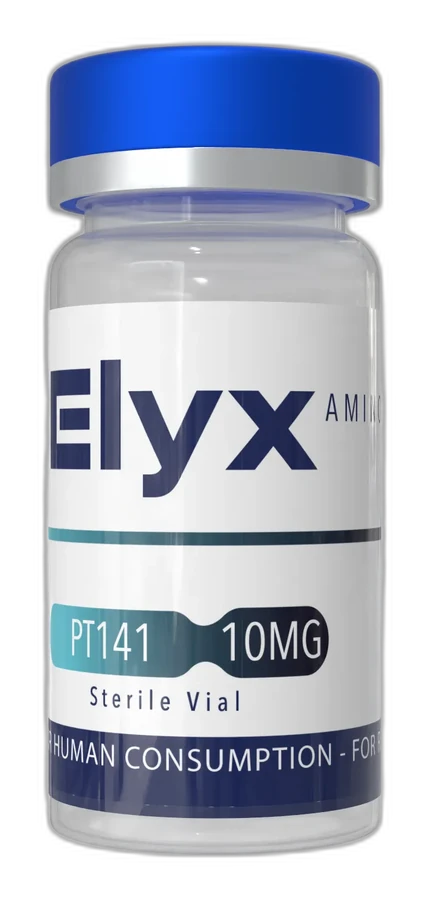
Research context: mechanisms, human and preclinical evidence, limitations and precautions are in How this works and References. The calculator (Spanish) converts any other volume.
PT 141 Dosage Chart (10 mg vial)
Dosing & Reconstitution Guide
Educational guide for reconstitution and daily dosing
Standard / Gradual Approach (2 mL = ~5 mg/mL)
| Week / phase | Daily dose | Units per injection (mL) |
|---|---|---|
| Weeks 1–8 | 500 mcg | 10 units (0.10 mL) |
| Weeks 9–12 | 1 mg (1000 mcg) | 20 units (0.20 mL) |
| Weeks 13–16 | 1.5 mg (1500 mcg) | 30 units (0.30 mL) |
Frequency: Once daily, subcutaneously, at a consistent time.
Note: In the source the route is subcutaneous (abdomen or thigh); no more than one injection per day is described.
Reconstitution Steps
- Draw 2 mL of bacteriostatic water with a sterile syringe.1
- Inject slowly down the vial wall; avoid shaking to prevent foaming.2
- Gently swirl or roll until fully dissolved (clear solution).3
- Label with the reconstitution date and refrigerate at 2–8 °C, protected from light; use within 4 weeks.4
Important: this guide is for educational purposes only and is not medical advice. For research use only. Not for human consumption.
U-100 Conversion Table (2 mL = 5 mg/mL)
| U-100 units | Volume | Contains | Yield per vial |
|---|---|---|---|
| 2 | 0.02 mL | 100 mcg | 100 injections |
| 5 | 0.05 mL | 250 mcg | 40 injections |
| 10 | 0.10 mL | 500 mcg | 20 injections |
| 20 | 0.20 mL | 1 mg (1000 mcg) | 10 injections |
| 30 | 0.30 mL | 1.5 mg (1500 mcg) | 6 injections |
| 50 | 0.50 mL | 2.5 mg (2500 mcg) | 4 injections |
| 100 | 1.00 mL | 5 mg (5000 mcg) | 2 injections |
This section describes which dose a study or reference source used and what it measured. It is not a recommendation or an administration schedule. A trial dose belongs to its population, duration and supervision and does not transfer to anyone outside that context.
Supplies Needed
Straightforward 12- and 24-week planning for a 10 mg vial at 5 mg/mL.
PT 141 vials (10 mg each)
- Standard / Gradual Approach, 12 weeks: Minimum 6 vials (56 mg required).
- Standard / Gradual Approach, 24 weeks: Minimum 19 vials (182 mg required).
U-100 syringes (1 mL)
- Standard / Gradual Approach, 12 weeks: 84 new syringes for 84 injections.
- Standard / Gradual Approach, 24 weeks: 168 new syringes for 168 injections.
Bacteriostatic water
- Standard / Gradual Approach, 12 weeks: 12 mL total (2 mL per vial) → 4 × 3 mL vials.
- Standard / Gradual Approach, 24 weeks: 38 mL total (2 mL per vial) → 13 × 3 mL vials.
Alcohol swabs
- Standard / Gradual Approach, 12 weeks: 168 minimum; one box of 100 does not cover the calculation.
- Standard / Gradual Approach, 24 weeks: 336 minimum; one box of 100 does not cover the calculation.
Sharps container: one appropriately sized. Stability planning: totals are minimum arithmetic quantities; follow the product documentation for sterility, storage, handling loss and discard timing.
PT 141 10mgView in store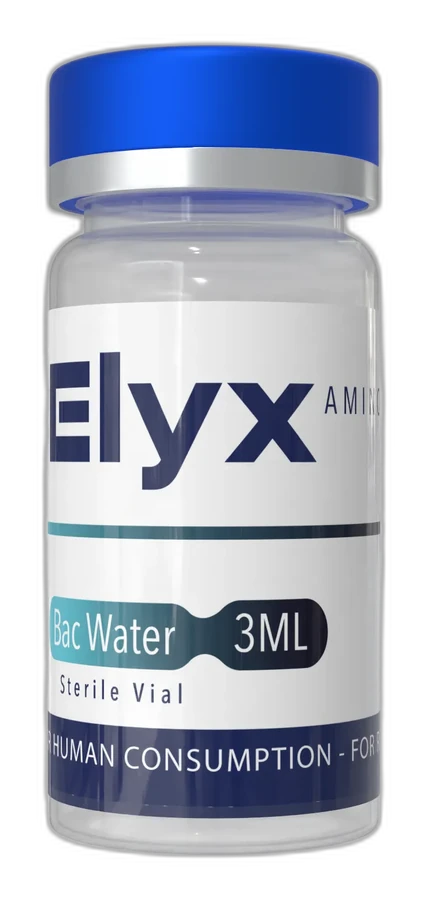 Bacteriostatic water 3 mLView in store
Store links may earn a commission. A supplier page is not scientific evidence or proof of suitability for human use.
PT 141 Vial and Research Context
- Reconstitute: add 2 mL of bacteriostatic water to produce 5 mg/mL.
- Frequency in the source: once daily, subcutaneously.
- Described range: schedules run from 500 mcg to 1.5 mg (1500 mcg) per injection.
- Easy measuring: 1 U-100 unit = 0.01 mL = 50 mcg.
- Vial size: the 10 mg label is total nominal content, not a per-injection amount.
- Vial coverage: at 500 mcg per injection one vial supplies 20 injections; at 1.5 mg (1500 mcg) it supplies 6. These are mass calculations, not storage periods.
Protocol Overview
Quick reference for the schedules shared by the cited literature.
- Frequency: once daily.
- Concentration: 10 mg in 2 mL = 5 mg/mL.
- Unit conversion: 1 U-100 unit = 50 mcg.
Dosing Schedule
The tables keep each approach separate.
- Standard / Gradual Approach: 500 mcg, 1 mg (1000 mcg), 1.5 mg (1500 mcg), in phases (once daily).
- Measurement: use the units and mL shown beside each amount.
Storage Instructions
- Lyophilized (unopened): −20 °C for long-term storage; 2–8 °C if used within weeks. Protected from light.
- Reconstituted: 2–8 °C, do not freeze. Use within the documented period (typically up to 4 weeks with bacteriostatic water).
- Handling: do not shake; avoid temperature cycling; label with date and concentration.
- Discard: cloudy solutions, particulates or expired preparations are discarded.
More detail in the storage guide (Spanish).
Important Notes
- Research only: the referenced compounds are sold for laboratory research. Nothing here is medical advice or an administration schedule.
- Evidence: chart amounts come from published trials or approved prescribing information, cited in References.
- Above 100 units: a 1 mL U-100 syringe cannot hold them; split across syringes or reconstitute with less volume.
- Accuracy: concentration depends on the actual volume added; measure the diluent with a syringe, not by eye.
- Verification: confirm vial contents against the batch certificate of analysis before calculating.
How This Works
PT-141 (Bremelanotide) is a cyclic synthetic heptapeptide (MW: 1025.2 Da) derived from α-MSH (melanocyte-stimulating hormone), developed as a selective agonist of the MC3R and MC4R melanocortin receptors. Unlike its predecessors (Melanotan I/II), PT-141 exhibits optimized selectivity for applications related to sexual function and arousal, with an improved side-effect profile.
Molecular Structure:
- Sequence: Ac-Nle-cyclo[Asp-His-D-Phe-Arg-Trp-Lys]-OH
- Cyclization: Asp-Lys lactam bridge (conformational stability)
- Modifications
- Nle (Norleucine) position 4: prevents oxidation vs Met
- D-Phenylalanine position 7: proteolytic degradation resistance
- N-terminal acetylation: exopeptidase protection
- Selectivity: MC3R/MC4R > MC1R (less pigmentation effect vs. Melanotan II)
Melanocortin System and Receptors
The melanocortin system comprises 5 receptor subtypes (MC1R-MC5R), each with specific tissue distribution and functions:
Receptor Main Distribution Functions PT-141 Affinity MC1R Melanocytes, immune Pigmentation, anti-inflammatory Low-Moderate MC2R Adrenal cortex Steroidogenesis (ACTH) Very Low MC3R SNC (hypothalamus, limbic), peripheral Energy homeostasis, sexual behavior High MC4R SNC (hypothalamic nuclei, cortex) Satiety, sexual function, erection High MC5R Exocrine glands, muscle Sebaceous secretion, thermogenic function ModerateMolecular Mechanisms of Sexual Action:
- Central MC3R/MC4R Activation:
Excitation Neural Circuits:
- Paraventricular Nucleus (PVN) Hypothalamus:
- High MC4R density, integration of excitatory signals
- Descending projections to sacral spinal cord
- Amygdala, prefrontal cortex connections (emotional component)
- Medial Preoptic Area (MPOA)
- “Sexual integration center” brain
- MC3R/MC4R expression in key neurons
- Nitric oxide (NO) release via nitrergic neurons
Neurotransmission
- Nitric Oxide (NO):
- Upregulation of nNOS (neuronal nitric oxide synthase) 200-300%
- Genital vasodilation: cavernous/clitoral smooth muscle relaxation
- Central effects: facilitation of sexual arousal/response
- Dopamine
- Increased VTA release, nucleus accumbens
- Sexual motivation, reward, proceptive behavior
- D1/D2 receptor interaction: potentiation of response
- Endogenous melanocortins:
- α-MSH, β-MSH: tonic modulators of arousal
- AgRP (Agouti-related peptide): endogenous MC3R/MC4R antagonist
- Agonist/antagonist balance: regulation of basal sexual function
- Peripheral Effects:
Male Genitalia
- Smooth muscle cavernosum: NO/cGMP-mediated relaxation
- Penile blood flow: increase of 250–400%
- Intracavernous pressure: 40-60 mmHg
- Mechanism: independent testosterone, complementary PDE5 inhibitors
Female Genitalia:
- Clitoral/labial vasocongestion: volume increase 35-50%
- Vaginal lubrication: increased plasma transudation of epithelium
- Tactile sensitivity: enhancing sensory responses
- Vaginal smooth muscle: relaxation facilitating penetration
Pharmacokinetics:
- Bioavailability SC: 100% (the only approved/studied method)
- Tmáx: 60-90 minutes (effects start 30-45 min)
- Duration of effects: 6-12 hours (sexual receptivity window)
- Median life 2-3 hours (elimination)
- Metabolism: proteolytic degradation, with no known active metabolites
- Excretion primary renal (80%), fecal (20%)
Blood-brain barrier efficient cross (central action mechanism)
Research Applications
1. FEMALE SEXUAL DYSFUNCTION (HSDD – Hypoactive Sexual Desire Disorder)
Hypoactive Sexual Desire Disorder
Definition and Prevalence:
- HSDD: Absence/decrease in sexual thoughts/fantasies + lack of sexual response desire
- Prevalence: 8–121 TP3T in premenopausal women, 12–261 TP3T in postmenopausal women
- Impact: Significant personal distress, relationship conflicts
PT-141 Pivotal Clinical Studies:
RECONNECT Study (Kingsberg et al., 2019):
- Design: Phase 3 RCT, n=1,247 premenopausal women with HSDD
- Dosage: 1.75 mg SC on-demand (45 min before anticipated sexual activity)
- Duration: 24 weeks
- Primary outcomes:
- Satisfying Sexual Events (SSE) +1.2 vs +0.4 placebo (p<0.001)
- Desire (FSFI-D): Improves 0.3 points vs placebo (p<0.001)
- Response rate (≥1.2 SSE increase): 35% vs. 23% placebo
RECONNECT 2 (Portman et al., 2020):
- n=1,281 women, similar design
- SSE increase: +1.2 events/month vs +0.6 placebo
- Sexual distress: reduction from 25% to 15% with placebo (FSD-R scale)
- Spontaneous desire: reported improvement 42% vs. 31%
HSDD Mechanisms
- MC4R PVN activation: increased sexual motivation (“wanting”)
- Mesolimbic dopamine: Restoration of reward/anticipation circuits
- Inhibition reduction: serotonin modulation (indirect 5-HT₂C antagonism)
- Peripheral sensitization: improved perception of genital tactile stimulation
2. MALE ERECTILE DYSFUNCTION (Preclinical/Early Clinical Research)
Erection Mechanisms
Central Route (Predominant PT-141):
- MC4R PVN activation → spinal cord proerectile projections
- Sacral autonomic nuclei (S2-S4): parasympathetic output
- Nitrenergic neurons: release of NO in cavernous tissue
- Independent direct tactile stimulation: “central” erections”
Preliminary Human Studies
- Phase 2a (Wessells et al., 2000): n=20 men with psychogenic/mixed ED
- Dosage: 0.5-20 mg IN (intranasal, early formulation)
- Answer: Spontaneous erections in 60% participants
- Duration: 2-6 hours response window
- Adverse effects: nausea 40%, flushing 30%
- Comparative study vs. Sildenafil (Diamond et al., 2004):
- PT-141: Effective for psychogenic/neurogenic
- Sildenafil: superior vasculogenic ED
- Complementarity: different mechanisms of action
Specific Populations Benefit:
- Neurogenic bladder Spinal cord injury, diabetic neuropathy
- Psychogenic Performance anxiety, psychological inhibition
- No responders PDE5i Patients who did not respond to sildenafil/tadalafil (10-30%)
- Post-prostatectomy Nerve preservation uncertain
3. LIBIDO AND SEXUAL MOTIVATION (Both Sexes)
Sexual Desire Components:
Dual Model (Excitation/Inhibition):
- Excitement (SES): Facilitation of sexual response (dopamine, melanocortin)
- Inhibition (SIS): Braking response (serotonin, endogenous opioids)
- PT-141: shift balance toward arousal (↑ SES, ↓ SIS)
Libido Effects: Base
- Sexual thoughts: increased frequency 30-40%
- Sexual fantasies: improving vividness/emotional content
- Receptivity: greater openness initiation/response activity
- Subjective arousal: amplification of perceived arousal
Sex Differences
- Women: greater improvement in spontaneous desire (30–401 TP3T responders)
- Men: Libido effects + erectile function (dual benefit)
- Individual variability: 30–50% robust response, 20–30% minimum
4. ANORGASMIA AND ORGASMIC RESPONSE
Orgasmic Dysfunction
Potential Mechanisms:
- Spinal reflex awareness: facilitation of the orgasmic reflex arc
- Sensory amplification: increased processing of genital signals
- Orgasm umbra: reduced stimulation needed
- Subjective intensity: enhances pleasurable experience
Preliminary Evidence:
- Open-label studies: improved orgasmic capacity in 25-35% women with secondary anorgasmia
- Orgasm latency: reduction in time required for stimulation
- Multiple orgasms: facilitation in a subgroup of women
- Orgasm quality: increased intensity/satisfaction (qualitative reports)
5. ANTIDEPRESSANT SIDE EFFECTS (SSRI-Induced Sexual Dysfunction)
SSRI-induced Sexual Dysfunction
Prevalence and Mechanisms:
- 40-65%: SSRI patients: sexual dysfunction (desire, arousal, orgasm)
- Mechanism: 5-HT₂C agonism (dopamine/NO inhibition)
- Adherence: 20-30% discontinued due to sexual side effects
- Quality of life: significant impact, factor in maintaining depression
PT-141 as a Potential Antidote:
- Counterregulation: Dopamine/Melanocortin vs. Serotonergic Inhibition
- Case study: improving sexual function while maintaining antidepressant efficacy
- Dosage: on-demand vs chronic (research needed)
- Current alternatives: bupropion (less dysfunction), SSRI dose reduction
6. NON-SEXUAL RESEARCH APPLICATIONS
Motivation and Reward System:
Anhedonia (Depression/Addiction):
- MC4R nucleus accumbens: reward circuit modulation
- Awareness pleasure: response to natural stimuli (food, social)
- Motivational Approach: Goal-Directed Behaviors
Social Cognition:
- Oxytocin: Melanocortin-Oxytocin System Interaction
- Facial emotion recognition: processing improvement
- Prosocial behavior: increase affiliative behaviors
Appetite/Weight Regulation (Hypothalamic MC4R):
Satiety
- MC4R paraventricular nucleus: potent anorexigenic signal
- Food intake: reduction of 15–251 TP3T (adverse effects at high doses)
- Balance: Pro-sexual doses (<2 mg) minimal appetite effect
- Melanotan II difference: this last one is a potent anorectic (limited use)
Injection Technique in Research
- Route in the studies: subcutaneous, in abdominal or thigh adipose tissue, rotating the site.
- Syringe: 1 mL U-100 (100 units); read in units, not mL.
- Asepsis: alcohol swab on the stopper and the site; a new syringe per injection.
- Drawing: purge air, draw the units from the chart and verify before withdrawing the needle from the vial.
Full guide: U-100 syringes and reading units (Spanish).
Research FAQ
PT-141 vs. PDE5 Inhibitors (Sildenafil, Tadalafil)? R: Mechanisms and different applications:
PT-141:
- Mechanism: Central (cerebral MC3R/MC4R activation)
- Effects: desire + arousal + genital function
- Timing: 30-45 min start, duration 6-12h
- Optimal indications: Female HSDD, psychogenic/neurogenic ED, reduced libido
- Adverse effects: nausea (40%), flushing (15%), headache (10%)
PDE5 Inhibitors:
- Mechanism: Peripheral (NO/cGMP potentiation in genitalia)
- Effects: Primarily erectile function (not direct libido)
- Timing: 30-60 min (sildenafil), up to 36h (tadalafil)
- Optimal indications: Vasculogenic erectile dysfunction, primary
- Adverse effects: headache (16%), flushing (10%), dyspepsia (7%)
Complementarity Different mechanisms allow potential combination (limited research).
Why is nausea such a common side effect? R: MC4R activation of the area postrema:
- Area postrema: lacks a complete blood-brain barrier, high MC4R expression
- “Vomiting center” brain: chemoreceptor trigger zone
- Dose-dependent: nausea at doses of 40–50% (1.75–2.0 mg), 15–20% at doses <1.0 mg
- Adaptation: partial tolerance to repeated use (50% cases)
- In the literature, the incidence of nausea was inversely associated with the administered dose (documented dose-dependent effect).
Q: What is the documented pharmacokinetic window in the studies? R: 30-90 minute window:
- Pharmacological Tmax: 60-90 min (peak concentration)
- Onset of subjective effects: 30-45 min (range 20-60 min)
- Peak effects: 90-180 min post-administration
- Receptivity window duration: 4-8 hours typical, up to 12 hours in some individuals
- In the trial protocols, administration was documented 45-60 min prior to the assessed event.
Tachyphylaxis or tolerance with chronic use? R: Limited tolerance:
- 24-week studies: sustained efficacy without significant loss
- Receptor downregulation: minimal (typical on-demand use)
- Some users: reduction of nausea with repeated use (positive adaptation)
- In studies, the on-demand regimen showed less receptor desensitization than continuous exposure.
Significant drug interactions? R: Favorable interactions profile:
- No interactions: PDE5 inhibitors, hormonal contraceptives, antidepressants (most)
- Theoretical caution: Dopaminergic agonists/antagonists (additive/antagonistic effects)
- Avoid unstudied combinations: α-MSH analogs, other melanocortin agonists
- Cardiovascular medication No absolute contraindications, monitor blood pressure
P: Differences Melanotan II vs PT-141? R: PT-141 is an enhanced derivative:
Melanotan II:
- Non-selective agonist: MC1R (pigmentation), MC3R/MC4R (sexual)
- Side effects: noticeable tanning, darkening of nevi, severe nausea
- Potent anorectic: significant appetite loss
- Action duration: 24-48h (long half-life)
PT-141:
- Enhanced selectivity: MC3R/MC4R > MC1R (lower pigmentation)
- Tanning: minimal/absent therapeutic doses
- Appetite: Minimal effects pro-sexual doses
- Duration: 6-12h (more controllable profile)
- Clinical Development: FDA Approval (Melanotan II not approved)
What do studies in postmenopausal models/populations document? R: Reported findings:
- Studies: include postmenopausal women with positive results
- Efficacy: comparable in premenopausal women (central mechanism, non-hormonal)
- Atrophic vaginitis: PT-141 does not correct (consider additional topical estrogen)
- Hormone therapy: compatible, no interactions
- Advantage: Non-hormonal alternative when TRH is contraindicated
Required monitoring for prolonged studies? R: Periodic reviews
- Blood pressure Baseline, weeks 2, 4, 8, every 8 weeks
- Transitory increase of 10-15 mmHg systolic post-dose (monitor)
- Skin pigmentation Visual inspection, standardized photographs
- Sexual function Validated scales (FSFI, IIEF) monthly
- Adverse effects: Prospective registration events, severity
Laboratory Metabolic profile, baseline liver/kidney function, and semester (optional)
Research Note
All content on this page is technical and educational. It describes how a vial is reconstituted, how a syringe is read and which amounts the cited sources describe. It does not replace the supervision of a qualified researcher or the judgment of a health professional, and it is not intended to diagnose, treat, cure or prevent any disease.
References
- Ficha técnica de bremelanotida (Vyleesi), FDA
- Kingsberg SA, et al. (2019) “Bremelanotide for the Treatment of Hypoactive Sexual Desire Disorder: Two Randomized Phase 3 Trials” – Obstetrics and Gynecology 134(5):899-908. [PubMed: 31599832]
- Portman DJ, et al. (2020) “Continued efficacy and safety of bremelanotide for hypoactive sexual desire disorder” – J Womens Health 29(6):861-869. [PubMed: 31895612]
- Wessells H, et al. (2000) “Melanocortin receptor agonists, penile erection, and sexual motivation” – Ann NY Acad Sci 897:349-357. [PubMed: 10676462]
- Diamond LE, et al. (2004) “An effect on the subjective sexual response in premenopausal women with sexual arousal disorder by bremelanotide (PT-141)” – J Sex Med 3(4):628-638. [PubMed: 16839318]
- Pfaus JG, et al. (2004) “Facilitation of sexual behavior in the male rat by a melanocortin agonist” – Hormones and Behavior 46(4):431-436. [PubMed: 15465528]
- Clayton AH, et al. (2016) “Bremelanotide for female sexual dysfunctions in premenopausal women” – J Sex Med 13(9):1506-1513. [PubMed: 27671968]
- Molinoff PB, et al. (2003) “PT-141: A melanocortin agonist for the treatment of sexual dysfunction” – Ann NY Acad Sci 994:96-102. [PubMed: 12851304]