HCG Quick Reference (5000 iu vial)
Research context: mechanisms, human and preclinical evidence, limitations and precautions are in How this works and References. The calculator (Spanish) converts any other volume.
HCG Dosage Chart (5000 iu vial)
No published clinical trial establishes a dosing regimen for HCG. Any figure circulating as a human protocol does not come from an indexed trial. This site does not publish doses without a verifiable source.
This section describes which dose a study or reference source used and what it measured. It is not a recommendation or an administration schedule. A trial dose belongs to its population, duration and supervision and does not transfer to anyone outside that context.
Supplies Needed
Usual material for working with this supply.
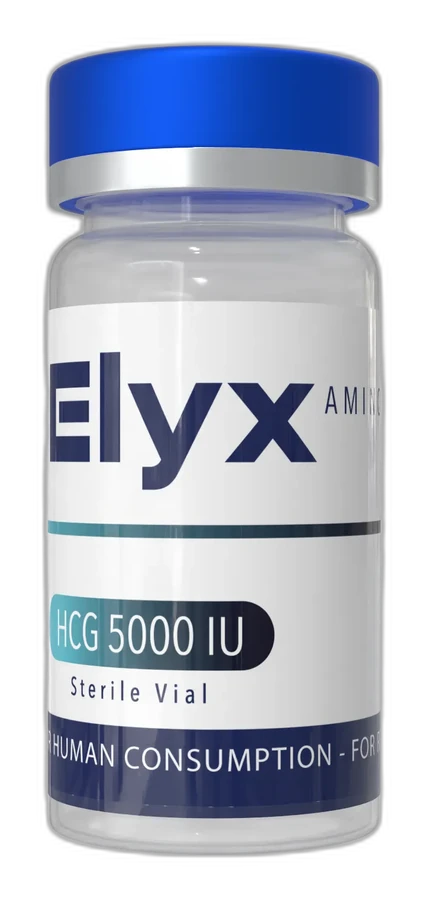
HCG 5000iuView in store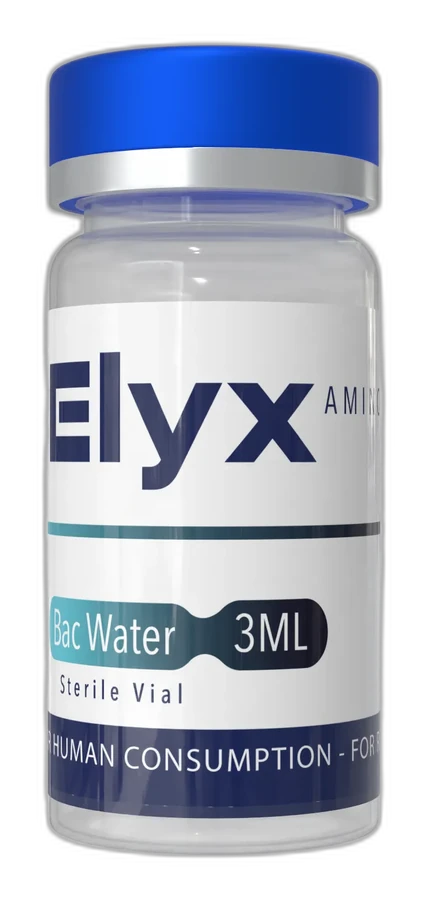 Bacteriostatic water 3 mLView in store
Store links may earn a commission. A supplier page is not scientific evidence or proof of suitability for human use.
Protocol Overview
Quick reference for the schedules shared by the cited literature.
- Frequency: once weekly.
Dosing Schedule
The tables keep each approach separate.
- Standard Protocol: 500 IU, in phases (once weekly).
- High‑Dose Protocol (for Post‑Cycle Recovery or Severe Suppression): 1500 IU, 2000 IU, 1000 IU, in phases (once weekly).
- Measurement: use the units and mL shown beside each amount.
Storage Instructions
- Lyophilized (unopened): −20 °C for long-term storage; 2–8 °C if used within weeks. Protected from light.
- Reconstituted: 2–8 °C, do not freeze. Use within the documented period (typically up to 4 weeks with bacteriostatic water).
- Handling: do not shake; avoid temperature cycling; label with date and concentration.
- Discard: cloudy solutions, particulates or expired preparations are discarded.
More detail in the storage guide (Spanish).
Important Notes
- Research only: the referenced compounds are sold for laboratory research. Nothing here is medical advice or an administration schedule.
- Evidence: chart amounts come from published trials or approved prescribing information, cited in References.
- Verification: confirm vial contents against the batch certificate of analysis before calculating.
How This Works
Human Chorionic Gonadotropin (hCG) is a glycoprotein hormone (MW: 36,700 Da) composed of two non-covalently linked subunits (α: 92 aa, β: 145 aa). Naturally produced by the placental syncytiotrophoblast during pregnancy, hCG exhibits biological activity analogous to pituitary LH (luteinizing hormone) with greater potency and extended half-life.
Molecular Structure:
- Alpha subunit Identical to LH, FSH, TSH (common)
- Beta subunit: Specific hCG (confers biological specificity)
- Glycosylation: 30% molecular weight (4 N-glycosylation sites, 4 O-glycosylation)
- Half-life: 24-36 hours (vs 20 min LH, due to hyperglycosylation)
Mechanisms of Action:
- LH/hCG Receptor (LHCGR) Activation:
- Receptor: GPCR (7-transmembrane) on testicular Leydig cells, ovarian theca
- Transduction: Gs protein coupling → adenylate cyclase → ↑ cAMP → PKA
- Cascade: StAR (steroidogenic acute regulatory protein) phosphorylation
- Result: mitochondrial cholesterol transport → steroidogenesis
- Testicular Steroidogenesis:
- Leydig cells: testosterone synthesis stimulation
- Key enzymes: CYP11A1 (side-chain cleavage), 3β-HSD, 17β-HSD
- Testosterone production: 200-400% increase over baseline levels
- Paracrine effects: spermatogenesis support (Sertoli cells)
- Ovarian Function:
- Preovulatory follicle: final maturation, ovulation
- Corpus luteum: progesterone production maintenance
- Luteinization: granulosa/theca cell differentiation
- Angiogenesis: corpus luteum vascularization (VEGF pathway)
Recombinant hCG Pharmacokinetics:
- SC bioavailability: 40–50% (vs. 100% IM)
- IM bioavailability: ~100%
- Tmax: 12-24 hours (SC), 6-12 hours (IM)
- Half-life: 29-36 hours (allows 2-3x/week dosing)
- Renal clearance: primary
- Detection: urine/serum up to 7-14 days post-administration
Research Applications
1. MALE FERTILITY AND SPERMATOGENESIS
Hypogonadotropic Hypogonadism:
Steroidogenesis Restoration:
- Serum testosterone: increase from <100 ng/dL to 400-700 ng/dL
- Response time: detectable levels 48-72h, normalization 2-4 weeks
Spermatogenesis Induction
- Combination: hCG + hMG (FSH-like) or hCG + recombinant FSH
- Sperm concentration: increase from azoospermia to 5-15 million/mL (12-24 months)
- Motility: improvement 30-40%
- Prolonged treatment: 18-24 months typical for complete spermatogenesis
Cryptorchidism (Animal Models):
- Testicular descent: gubernaculum stimulation
- Success rate: 20-40% spontaneous reduction (pre-surgical)
- Protocol: 250-1000 IU 2x/week, 4-6 weeks
- Mechanism: androgens + insulin-like factor 3 (INSL3)
2. PREVENTION OF TESTICULAR ATROPHY DURING GONADAL SUPPRESSION
Androgen Suppression Models
Use of Exogenous Androgens (Research):
- Negative feedback: exogenous testosterone → LH/FSH suppression → testicular atrophy
- Preventive hCG: maintains intratesticular Leydig cell stimulation
- Testicular volume: preservation 70–851 TP3T vs. 40–601 TP3T without hCG
- Intratesticular testosterone: maintenance of high local levels (spermatogenesis)
Preventive Protocols
- Dosage: 250-500 IU 2x/week during suppression
- Timing: simultaneous onset with exogenous androgens
- Recovery: Reduced post-cycle recovery time 50%
3. BODY WEIGHT AND COMPOSITION (CONTROVERSIAL)
Simeons Protocol (Historical):
Original Concept (1954):
- hCG 125-200 IU/day + 500 cal/day diet
- Hypothesis: hCG mobilizes “abnormal” fat without hunger
- Weight loss: 0.5-1 lb/day reported
Modern Scientific Evidence:
- Meta-analysis (Lijesen et al., 1995): No significant difference vs placebo
- Weight loss: attributable to severe caloric restriction, not hCG
- Hunger: validated reduction vs. placebo
- Lean mass: significant loss (negative effect)
Conclusion Consensus:
- hCG for weight loss No robust scientific evidence
- FDA (1975): “Not effective for obesity” labeling”
- Research use: focus on reproductive/endocrine mechanisms
4. DIAGNOSIS AND TESTING LEYDIG CELL FUNCTION
hCG Stimulation Test:
Diagnostic Protocol:
- Basal: testosterone, LH, FSH
- Administration: 1500-5000 IU hCG single IM dose
- Post-stimulation: testosterone 72-96h after
- Interpretation
- Normal response: ↑ testosterone >200 ng/dL above baseline
- Primary failure: no response (Leydig cell damage)
- Secondary failure: present response but low baseline
Applications:
- Differentiation between primary and secondary hypogonadism
- Pre-pubertal Leydig cell reserve evaluation
- Treatment response prediction
5. OVULATION INDUCTION (Female Models)
Assisted Reproductive Technologies
Ovulatory Trigger
- Timing: Administration when dominant follicle ≥18-20mm
- Dosage: 5,000-10,000 IU single dose
- Ovulation: 34-36 hours post-administration
- Mechanism: mimics natural LH surge
Luteal Phase Support
- Dosage: 1500-2500 IU every 3-4 days
- Duration: 2 weeks post-ovulation
- Maintenance: corpus luteum progesterone production
- Alternative: exogenous progesterone (most common clinically)
Controlled Superovulation
- Combination: FSH + hCG final maturation
- Models: IVF, assisted reproduction research
- Multiple follicles: synchronized development
- Precise timing: oocyte retrieval 34-36h post-hCG
Injection Technique in Research
- Route in the studies: subcutaneous, in abdominal or thigh adipose tissue, rotating the site.
- Syringe: 1 mL U-100 (100 units); read in units, not mL.
- Asepsis: alcohol swab on the stopper and the site; a new syringe per injection.
- Drawing: purge air, draw the units from the chart and verify before withdrawing the needle from the vial.
Full guide: U-100 syringes and reading units (Spanish).
Research FAQ
hCG vs. TRT (Testosterone Replacement Therapy) for Hypogonadism R: Critical differences:
hCG
- Intratesticular testosterone: maintained (spermatogenesis preserved)
- Testicular volume: preserved
- Fertility: maintained/restorable
- Frequency: 2-3x/week
- Cost: higher
TRT
- Intratesticular testosterone: suppressed (atrophy, infertility)
- Testicular volume: reduced 30-50%
- Fertility: compromised
- Frequency: variable (daily-weekly depending on formulation)
- Cost: lower
Choice: hCG if fertility/testicular function is important; TRT if only androgen replacement.
Q: hCG + FSH combination protocol for spermatogenesis? Standard protocol for hypogonadotropic hypogonadism:
- hCG 1500-2500 IU, 2-3x/week (Leydig/testosterone stimulation)
- Recombinant FSH 75-150 IU, 3x/week (direct spermatogenesis)
- Duration: 12-24 months typically
- Monitoring Seminal analysis every 3 months, testosterone monthly
- Success rate: Detectable sperm in 60–80% cases
LH/hCG receptor desensitization? Possible with high doses or excessive frequency:
- Downregulation Chronic high exposure → reduction LHCGR expression
- Prevention Physiological doses (500-1500 IU 2-3x/week)
- Signs Decreased testosterone response, requires increasing doses
- Recovery Rest 4-8 weeks to restore sensitivity
Main side effects research? Dose-dependent effects:
- Leaves: Injection site pain, fluid retention, acne
- Moderates Gynecomastia (testosterone aromatization→estradiol)
Rare: Hyper
Research Note
All content on this page is technical and educational. It describes how a vial is reconstituted, how a syringe is read and which amounts the cited sources describe. It does not replace the supervision of a qualified researcher or the judgment of a health professional, and it is not intended to diagnose, treat, cure or prevent any disease.
References
- Protocolo de estimulación con hCG en práctica endocrinológica