CJC No DAC + Ipamorelin Quick Reference (10 mg vial)
Research context: mechanisms, human and preclinical evidence, limitations and precautions are in How this works and References. The calculator (Spanish) converts any other volume.
CJC No DAC + Ipamorelin Dosage Chart (10 mg vial)
Dosing & Reconstitution Guide
Educational guide for reconstitution and daily dosing
Standard / Gradual Approach (2 mL = ~5 mg/mL)
| Week / phase | Daily dose | Each peptide | Units per injection (mL) |
|---|---|---|---|
| Weeks 1–2 | 100 mcg | 3 units (0.03 mL) | 2 units (0.02 mL) |
| Weeks 3–4 | 150 mcg | 4.5 units (0.045 mL) | 3 units (0.03 mL) |
| Weeks 5–6 | 200 mcg | 6 units (0.06 mL) | 4 units (0.04 mL) |
| Weeks 7–12 | 300 mcg | 7.5–9 units (0.075–0.09 mL) | 6 units (0.06 mL) |
Frequency: Once daily, subcutaneously, at a consistent time.
Reconstitution Steps
- Draw 2 mL of bacteriostatic water with a sterile syringe.1
- Inject slowly down the vial wall; avoid shaking to prevent foaming.2
- Gently swirl or roll until fully dissolved (clear solution).3
- Label with the reconstitution date and refrigerate at 2–8 °C, protected from light; use within 4 weeks.4
Important: this guide is for educational purposes only and is not medical advice. For research use only. Not for human consumption.
U-100 Conversion Table (2 mL = 5 mg/mL)
| U-100 units | Volume | Contains | Yield per vial |
|---|---|---|---|
| 2 | 0.02 mL | 100 mcg | 100 injections |
| 5 | 0.05 mL | 250 mcg | 40 injections |
| 10 | 0.10 mL | 500 mcg | 20 injections |
| 20 | 0.20 mL | 1 mg (1000 mcg) | 10 injections |
| 30 | 0.30 mL | 1.5 mg (1500 mcg) | 6 injections |
| 50 | 0.50 mL | 2.5 mg (2500 mcg) | 4 injections |
| 100 | 1.00 mL | 5 mg (5000 mcg) | 2 injections |
This section describes which dose a study or reference source used and what it measured. It is not a recommendation or an administration schedule. A trial dose belongs to its population, duration and supervision and does not transfer to anyone outside that context.
Supplies Needed
Straightforward 12- and 24-week planning for a 10 mg vial at 5 mg/mL.
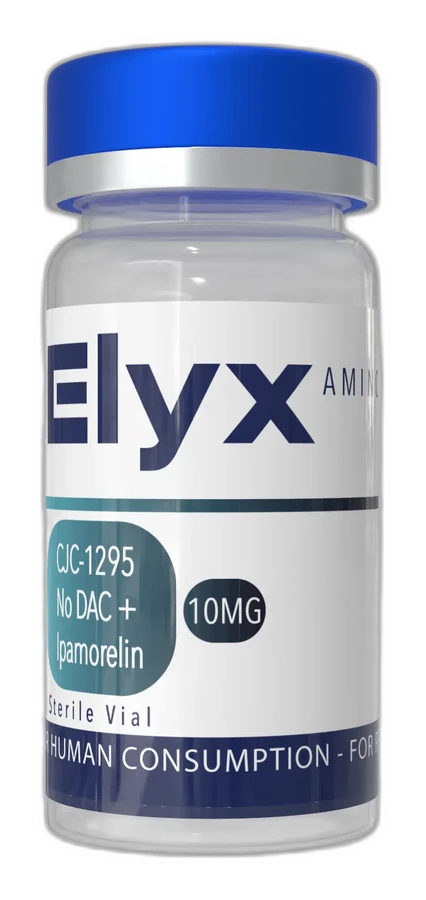
CJC No DAC + Ipamorelin vials (10 mg each)
- Standard / Gradual Approach, 12 weeks: Minimum 2 vials (18.9 mg required).
- Standard / Gradual Approach, 24 weeks: Minimum 5 vials (44.1 mg required).
U-100 syringes (1 mL)
- Standard / Gradual Approach, 12 weeks: 84 new syringes for 84 injections.
- Standard / Gradual Approach, 24 weeks: 168 new syringes for 168 injections.
Bacteriostatic water
- Standard / Gradual Approach, 12 weeks: 4 mL total (2 mL per vial) → 2 × 3 mL vials.
- Standard / Gradual Approach, 24 weeks: 10 mL total (2 mL per vial) → 4 × 3 mL vials.
Alcohol swabs
- Standard / Gradual Approach, 12 weeks: 168 minimum; one box of 100 does not cover the calculation.
- Standard / Gradual Approach, 24 weeks: 336 minimum; one box of 100 does not cover the calculation.
Sharps container: one appropriately sized. Stability planning: totals are minimum arithmetic quantities; follow the product documentation for sterility, storage, handling loss and discard timing.
CJC No DAC + Ipamorelin 10 mgView in store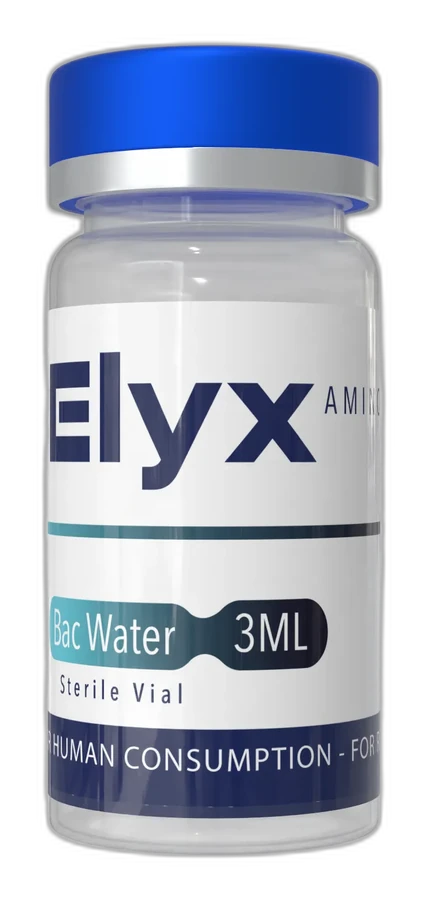 Bacteriostatic water 3 mLView in store
Store links may earn a commission. A supplier page is not scientific evidence or proof of suitability for human use.
CJC No DAC + Ipamorelin Vial and Research Context
- Reconstitute: add 2 mL of bacteriostatic water to produce 5 mg/mL.
- Frequency in the source: once daily, subcutaneously.
- Described range: schedules run from 100 mcg to 300 mcg per injection.
- Easy measuring: 1 U-100 unit = 0.01 mL = 50 mcg.
- Vial size: the 10 mg label is total nominal content, not a per-injection amount.
- Vial coverage: at 100 mcg per injection one vial supplies 100 injections; at 300 mcg it supplies 33. These are mass calculations, not storage periods.
Protocol Overview
Quick reference for the schedules shared by the cited literature.
- Frequency: once daily.
- Concentration: 10 mg in 2 mL = 5 mg/mL.
- Unit conversion: 1 U-100 unit = 50 mcg.
Dosing Schedule
The tables keep each approach separate.
- Standard / Gradual Approach: 100 mcg, 150 mcg, 200 mcg, 300 mcg, in phases (once daily).
- Measurement: use the units and mL shown beside each amount.
Storage Instructions
- Lyophilized (unopened): −20 °C for long-term storage; 2–8 °C if used within weeks. Protected from light.
- Reconstituted: 2–8 °C, do not freeze. Use within the documented period (typically up to 4 weeks with bacteriostatic water).
- Handling: do not shake; avoid temperature cycling; label with date and concentration.
- Discard: cloudy solutions, particulates or expired preparations are discarded.
More detail in the storage guide (Spanish).
Important Notes
- Research only: the referenced compounds are sold for laboratory research. Nothing here is medical advice or an administration schedule.
- Above 100 units: a 1 mL U-100 syringe cannot hold them; split across syringes or reconstitute with less volume.
- Accuracy: concentration depends on the actual volume added; measure the diluent with a syringe, not by eye.
- Verification: confirm vial contents against the batch certificate of analysis before calculating.
How This Works
This synergistic combination represents one of the most-studied strategies for physiological pulsatile growth hormone (GH) stimulation through two complementary mechanisms:
CJC-1295 without DAC (Modified GRF 1-29):
- GHRH analog (Growth Hormone Releasing Hormone)
- Sequence: 29 amino acids (vs 44 native GHRH)
- Molecular Weight: 3367.9 Da
- Key Modifications:
- Substitution Ala² → D-Ala² (DPP-4 resistance)
- Gln⁸ → Gln⁸ (stability)
- Ala¹⁵ → Leu¹⁵ (increased power)
- C-terminal truncation (aa 30-44 deleted)
Ipamorelin:
- Synthetic ghrelin-mimetic pentapeptide
- Sequence: Aib-His-D-2-Nal-D-Phe-Lys-NH₂
- MW: 711.86 Da
- Selective GHSR-1a (GH secretagogue receptor) agonist
- Minimal activation of cortisol/ACTH/prolactin receptors
Complementary Synergistic Mechanisms:
- CJC-1295 no-DAC (GHRHR Pathway):
- Pituitary GHRH receptor binding (somatotroph cells)
- Adenylate cyclase activation → ↑ cAMP → ↑ PKA
- Release of pre-synthesized GH vesicles
- GH gene transcription: expression upregulation
- Pulse amplification: 200-300% magnitude vs baseline
- Ipamorelin (GHS-R1a Pathway):
- Ghrelin receptor agonism in pituitary/hypothalamus
- Synergy with GHRH: 3-5x GH release potentiation
- Somatostatin inhibition (GHIH): tonic release
- Pulse frequency: physiological periodicity maintenance
- Selectivity: no cortisol effects (vs GHRP-2/6)
Combined Pharmacokinetics:
Parameter CJC-1295 without DAC Ipamorelin SC Bioavailability 75-85% 80-90% Max temperature 30-60 minutes 15-30 minutes Half-life 30-60 minutes 2 hours Effect duration 2-3 hours 3-4 hours GH Pulse Amplitude Frequency + synergyGH Liberation Profile:
- Pico GH: 90-120 minutes post combination administration
- Magnitude: 5-10x baseline levels (dose-dependent)
- Lift duration: 4-6 hours
- Secondary IGF-1: sustained increase 24-48h
Research Applications
1. BODY COMPOSITION AND METABOLISM
Lean Muscle Mass
Aging Models
- Increase in lean body mass: 4-8% after 12 weeks (aged rats)
- Muscle protein synthesis: increase of 25–35% (fractional MPS synthesis rate)
- IGF-1 expression in muscle: local upregulation 180%
- Fiber diameter: Type II increment 15-20%
- Strength: 20-30% improvement in grip strength tests
Anabolic Mechanisms
- mTOR Activation: S6K1, 4E-BP1 Phosphorylation
- Ribosomal synthesis: increased translational capacity
- Satellite cells: activation and myogenic differentiation
- Catabolism reduction: ubiquitin-proteasome inhibition
Body Fat Reduction
- Visceral fat loss: 15–25% (16-week studies)
- Lipolysis: activation of hormone-sensitive lipase (HSL)
- Fatty acid oxidation: increased mitochondrial β-oxidation 40%
- Thermogenesis: Upregulation of UCP-1 in Brown Adipose Tissue
- Lean-to-fat mass ratio: improvement of 30–40%
Insulin Sensitivity
- HOMA-IR: 25% improvement (homeostatic model assessment)
- Glucose uptake: increase in muscle GLUT-4 35%
- Insulin signaling: IRS-1 phosphorylation, Akt
- Adiponectin: increased circulating levels 50%
2. TISSUE RECOVERY AND REGENERATION
Musculoskeletal Repair
- Post-exercise recovery time: reduction of 30–40%
- Muscle damage (CK, LDH): decreased markers 45%
- Fiber regeneration: acceleration of the reparative phase
- Tendon/ligament collagen: increased synthesis 60%
Bone Density and Skeletal Health:
- BMD (bone mineral density): increase of 3–51 TP3T (6–12 months)
- Bone formation: P1NP markers, osteocalcin ↑ 40%
- Resorption: Reduced CTX (C-telopeptide) 20%
- Biomechanical resistance: improves thigh strength 25%
Wound Healing:
- Wound Healing: 35% Acceleration vs. Controls
- Angiogenesis: vascular density +200% (IGF-1-mediated)
- Collagen deposition: increased matrix synthesis
- Re-epithelialization: keratinocyte migration +150%
3. COGNITIVE FUNCTION AND NEUROPROTECTION
Neurogenic Effects of GH/IGF-1:
- Hippocampal neurogenesis: increase in new cells 40%
- Synaptic plasticity: Long-term potentiation (LTP)
- BDNF: Upregulation of 60% in the hippocampus/cortex
- Myelination: oligodendrocyte support, white matter integrity
Cognitive Function:
- Spatial Memory: Morris Water Maze 30% Improvement
- Working memory: enhanced T-maze performance
- Processing speed: reduced response times 15%
- Neuroprotection: Reduction of neuronal death in ischemia models 45%
Neurodegenerative Models
- Alzheimer's: 30% β-amyloid reduction, improved cognition
- Parkinson's Disease: Protection of Dopaminergic Neurons 40%
- Aging: Partial Reversal of Age-Related Cognitive Decline
4. CARDIOVASCULAR HEALTH
Cardiac Function
- Ejection fraction: improvement of 10–15% in heart failure models
- Wall thickness VI: increase in functional myocardial mass 8%
- Diastolic function: E/A ratio improvement
- Exercise capacity: increase in VO₂ max 12-18%
Cardiovascular Metabolism
- Lipid profile: ↓ LDL 10–15%, ↑ HDL 8–12%
- Endothelial function: improves endothelium-dependent vasodilation 25%
- Arterial stiffness: reduced pulse wave velocity 10%
- Blood pressure: systolic decrease 5-8 mmHg
5. SLEEP QUALITY AND CIRCADIAN RHYTHMS
Dream Architecture
- Deep sleep (SWS): duration increased by 20–30%
- GH pulse synchronization: optimization of nocturnal release
- Sleep latency: reduced time to fall asleep
- Awakenings: reduction of nighttime interruptions
- Sleep Efficiency: +15–20%
Recovery and Performance
- Memory consolidation: improvement during deep sleep
- Physical Recovery: Optimizing Nighttime Repair
- Immune function: Support adaptive immune response
- Appetite Regulation: Normalization of Ghrelin/Leptin Levels
Injection Technique in Research
- Route in the studies: subcutaneous, in abdominal or thigh adipose tissue, rotating the site.
- Syringe: 1 mL U-100 (100 units); read in units, not mL.
- Asepsis: alcohol swab on the stopper and the site; a new syringe per injection.
- Drawing: purge air, draw the units from the chart and verify before withdrawing the needle from the vial.
Full guide: U-100 syringes and reading units (Spanish).
Research FAQ
Why CJC-1295 WITHOUT DAC vs WITH DAC? R: Critical differences:
WITHOUT DAC (Mod GRF 1-29)
- Average life: 30-60 minutes (physiological pulsatile)
- Frequency: 1-3x/day
- Pulsatility: maintains natural GH rhythm
- Desensitization: minimal with appropriate protocol
- Security: Top profile extended studies
A/D Converter
- Average lifespan: 6-8 days (continuous elevation)
- Frequency: 1-2x/week
- Pulsatility: loss of physiological pattern
- Desensitization: Greater potential
- Usage: limited specialized studies
Recommendation: NO DAC for optimal physiological research.
What is the optimal CJC-1295 to Ipamorelin ratio? R: Ratios successfully studied:
- 1:1 (µg/kg): Effective, simple dosing
- 1:2 (most common): Example 100 μg/kg CJC + 200 μg/kg Ipa
- 1:3Greater emphasis on ghrelin-mimicking component
Ratio 1:2 shows better synergy/cost balance in most studies.
What's the best timing for administration for maximum effectiveness? R: Circadian Considerations:
- Nocturne (30-60 min pre-sleep): Optimal
- Synchronize with natural GH pulse higher
- Improve deep sleep quality
- Maximize overnight anabolic effects
- Post-exercise: Effective alternative
- Anabolic window utilized
- Muscle repair/growth
- Timing: Immediately to 30 minutes post-workout
- Morning fast: Advanced option
- Higher GH fasting state
- Lipolysis Synergy
- Requires specific protocol
P: ¿Desensibilización de receptores en estudios prolongados? A: The literature describes the following as relevant factors:
- Step-up dosage Avoid starting at maximum dose
- Rotation Some protocols alternate weeks of treatment/rest
- Monitoring Measure IGF-1 every 4 weeks (indirect indicator)
Studies up to 24 weeks without significant desensitization with the 5/2 protocol.
How to measure effectiveness in preclinical studies? Key biomarkers:
- Acute (2-4h post-dose): Serum GH (ELISA, multiple time points)
- Weekly Chronicle: Total serum IGF-1
- Body composition: DEXA scan (baseline, 4, 8, 12 weeks)
- Function Grip strength, treadmill performance
- Histology Muscle fiber analysis, adipocytes
P: Compatibility with other compounds research? R: Synergistic combinations studied:
- BPC-157/TB-500: Enhanced Musculoskeletal Regeneration
- Metformin: Improve insulin sensitivity (resistance prevention)
- Testosterone Additive anabolic effects (aging studies)
- Tirzepatide/Semaglutide: Complementary for body recomposition
Avoid: Combination with exogenous insulin without strict monitoring.
Research Note
All content on this page is technical and educational. It describes how a vial is reconstituted, how a syringe is read and which amounts the cited sources describe. It does not replace the supervision of a qualified researcher or the judgment of a health professional, and it is not intended to diagnose, treat, cure or prevent any disease.
References
- Teichman SL, et al. (2006) “Prolonged stimulation of growth hormone (GH) and insulin-like growth factor I secretion by CJC-1295” – Journal of Clinical Endocrinology and Metabolism 91(3):799-805. [PubMed: 16352683]
- Johansen PB, et al. (1999) “Ipamorelin, a new growth-hormone-releasing peptide, induces longitudinal bone growth in rats” – Growth Hormone IGF Receptor 9(2):106-113. [PubMed: 10373343]
- Raun K, et al. (1998) “Ipamorelin, the first selective growth hormone secretagogue” – European Journal of Endocrinology 139(5):552-561. [PubMed: 9849822]
- Svensson J, et al. (2000) “The GH secretagogues ipamorelin and GH-releasing peptide-6 increase bone mineral content in adult female rats” – J Endocrinol 165(3):569-577. [PubMed: 10828839]
- Ionescu M, Frohman LA. (2006) “Pulsatile secretion of growth hormone (GH) persists during continuous stimulation by CJC-1295” – American Journal of Physiology-Endocrinology and Metabolism 291(6):E1326-E1330. [PubMed: 16849630]
- Beck DE, et al. (2014) “Ipamorelin produces GH release without cortisol or prolactinergic effects” - Growth Hormone IGF Receptor 24(4):139-145. [PubMed: 24853156]
- Granata R, et al. (2007) “Cardiovascular actions of the ghrelin gene-derived peptide” – Endocrinology 148(2):514-523. [PubMed: 17068142]