NAD+ Quick Reference (1000 mg vial)
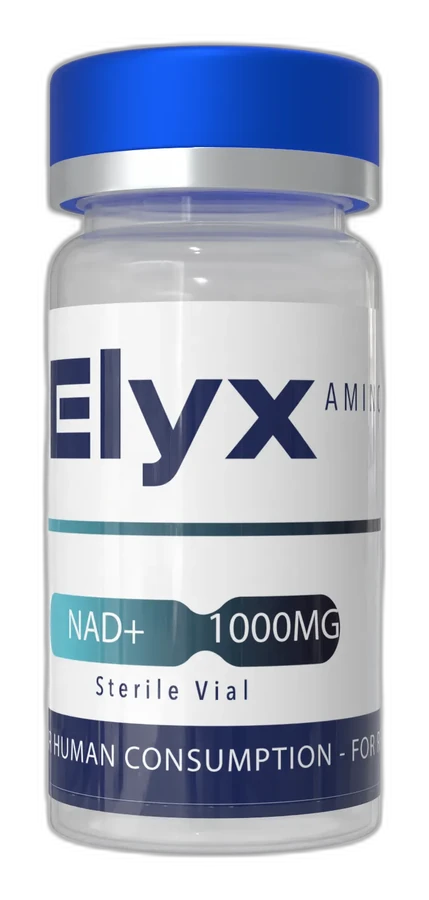
Research context: mechanisms, human and preclinical evidence, limitations and precautions are in How this works and References. The calculator (Spanish) converts any other volume.
NAD+ Dosage Chart (1000 mg vial)
Dosing & Reconstitution Guide
Educational guide for reconstitution and daily dosing
Standard / Gradual Titration Approach (3 mL = ~333.33 mg/mL)
| Week / phase | Daily dose | Units per injection (mL) |
|---|---|---|
| Week 1 | 50 mg (50000 mcg) | 15 units (0.15 mL) |
| Week 2 | 75 mg (75000 mcg) | 22.5 units (0.23 mL) |
| Weeks 3–8 | 100 mg (100000 mcg) | 30 units (0.30 mL) |
| Weeks 9–12 | 100 mg (100000 mcg) | 30 units (0.30 mL) |
| Weeks 13–16 | 100 mg (100000 mcg) | 30 units (0.30 mL) |
Frequency: Once daily, subcutaneously, at a consistent time.
Reconstitution Steps
- Draw 3 mL of bacteriostatic water with a sterile syringe.1
- Inject slowly down the vial wall; avoid shaking to prevent foaming.2
- Gently swirl or roll until fully dissolved (clear solution).3
- Label with the reconstitution date and refrigerate at 2–8 °C, protected from light; use within 4 weeks.4
Important: this guide is for educational purposes only and is not medical advice. For research use only. Not for human consumption.
U-100 Conversion Table (3 mL = 333.33 mg/mL)
| U-100 units | Volume | Contains | Yield per vial |
|---|---|---|---|
| 2 | 0.02 mL | 6.66667 mg (6667 mcg) | 150 injections |
| 5 | 0.05 mL | 16.6667 mg (16667 mcg) | 60 injections |
| 10 | 0.10 mL | 33.3333 mg (33333 mcg) | 30 injections |
| 20 | 0.20 mL | 66.6667 mg (66667 mcg) | 15 injections |
| 30 | 0.30 mL | 100 mg (100000 mcg) | 10 injections |
| 50 | 0.50 mL | 166.667 mg (166667 mcg) | 6 injections |
| 100 | 1.00 mL | 333.333 mg (333333 mcg) | 3 injections |
This section describes which dose a study or reference source used and what it measured. It is not a recommendation or an administration schedule. A trial dose belongs to its population, duration and supervision and does not transfer to anyone outside that context.
Supplies Needed
Straightforward 12- and 24-week planning for a 1000 mg vial at 333.33 mg/mL.
NAD+ vials (1000 mg each)
- Standard / Gradual Titration Approach, 12 weeks: Minimum 8 vials (7875 mg required).
- Standard / Gradual Titration Approach, 24 weeks: Minimum 17 vials (16275 mg required).
U-100 syringes (1 mL)
- Standard / Gradual Titration Approach, 12 weeks: 84 new syringes for 84 injections.
- Standard / Gradual Titration Approach, 24 weeks: 168 new syringes for 168 injections.
Bacteriostatic water
- Standard / Gradual Titration Approach, 12 weeks: 24 mL total (3 mL per vial) → 8 × 3 mL vials.
- Standard / Gradual Titration Approach, 24 weeks: 51 mL total (3 mL per vial) → 17 × 3 mL vials.
Alcohol swabs
- Standard / Gradual Titration Approach, 12 weeks: 168 minimum; one box of 100 does not cover the calculation.
- Standard / Gradual Titration Approach, 24 weeks: 336 minimum; one box of 100 does not cover the calculation.
Sharps container: one appropriately sized. Stability planning: totals are minimum arithmetic quantities; follow the product documentation for sterility, storage, handling loss and discard timing.
NAD+ 1000mgView in store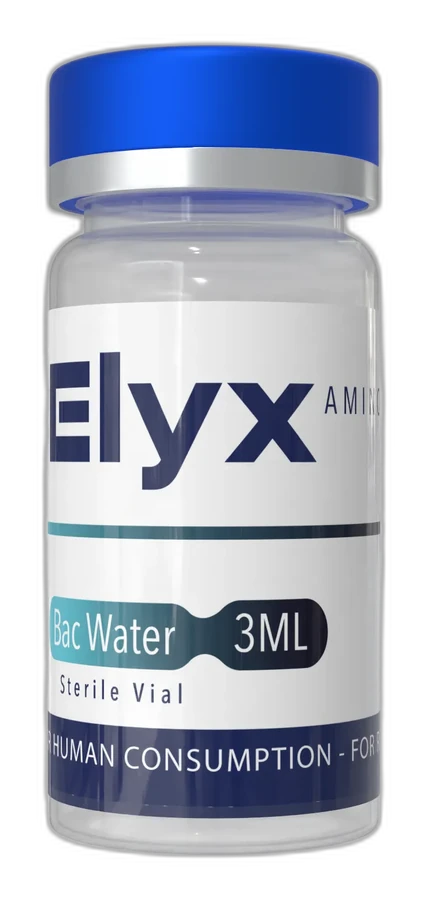 Bacteriostatic water 3 mLView in store
Store links may earn a commission. A supplier page is not scientific evidence or proof of suitability for human use.
NAD+ Vial and Research Context
- Reconstitute: add 3 mL of bacteriostatic water to produce 333.33 mg/mL.
- Frequency in the source: once daily, subcutaneously.
- Described range: schedules run from 50 mg (50000 mcg) to 100 mg (100000 mcg) per injection.
- Easy measuring: 1 U-100 unit = 0.01 mL = 3333 mcg.
- Vial size: the 1000 mg label is total nominal content, not a per-injection amount.
- Vial coverage: at 50 mg (50000 mcg) per injection one vial supplies 20 injections; at 100 mg (100000 mcg) it supplies 10. These are mass calculations, not storage periods.
Protocol Overview
Quick reference for the schedules shared by the cited literature.
- Frequency: once daily.
- Concentration: 1000 mg in 3 mL = 333.33 mg/mL.
- Unit conversion: 1 U-100 unit = 3333 mcg.
Dosing Schedule
The tables keep each approach separate.
- Standard / Gradual Titration Approach: 50 mg (50000 mcg), 75 mg (75000 mcg), 100 mg (100000 mcg), 100 mg (100000 mcg), 100 mg (100000 mcg), in phases (once daily).
- Measurement: use the units and mL shown beside each amount.
Storage Instructions
- Lyophilized (unopened): −20 °C for long-term storage; 2–8 °C if used within weeks. Protected from light.
- Reconstituted: 2–8 °C, do not freeze. Use within the documented period (typically up to 4 weeks with bacteriostatic water).
- Handling: do not shake; avoid temperature cycling; label with date and concentration.
- Discard: cloudy solutions, particulates or expired preparations are discarded.
More detail in the storage guide (Spanish).
Important Notes
- Research only: the referenced compounds are sold for laboratory research. Nothing here is medical advice or an administration schedule.
- Above 100 units: a 1 mL U-100 syringe cannot hold them; split across syringes or reconstitute with less volume.
- Accuracy: concentration depends on the actual volume added; measure the diluent with a syringe, not by eye.
- Verification: confirm vial contents against the batch certificate of analysis before calculating.
How This Works
NAD+ acts simultaneously as an enzymatic cofactor and as a substrate in multiple pathways:
Sirtuin activation (SIRT1-7):
Sirtuins are NAD+-dependent deacetylases that regulate key processes: mitochondrial biogenesis, oxidative stress response, longevity, lipid metabolism, and telomeric integrity maintenance. Without available NAD+, sirtuins do not function.
DNA repair via PARP:
Poly-ADP-ribose polymerases (PARP) consume NAD+ during DNA break repair. When there is significant genomic damage, PARPs rapidly sequester NAD+, which can deplete the pools available for other functions.
ATP Production:
NAD+ is the main electron acceptor in the Krebs cycle (TCA) and in fatty acid beta-oxidation. Its availability directly determines the cell's capacity to generate ATP from glucose or fat.
cADPR and NAADP signaling:
NAD+ is a precursor of second messengers that regulate intracellular calcium release, critical for muscle function, neurotransmission, and immune response.
Research Applications
- Longevidad celular: restauración de niveles de NAD+ en modelos animales prolonga lifespan y mejora healthspan
- Función mitocondrial: mejora de capacidad oxidativa, reducción de generación de ROS, aumento de biogénesis
- Cognition and neuroprotection: ensayos preliminares en deterioro cognitivo asociado al envejecimiento, Alzheimer, Parkinson
- Addiction recovery: clinical protocols in use for opioid and alcohol detoxification, with documented reduction in craving and withdrawal symptoms
- Síndrome de fatiga crónica: investigaciones en CFS/ME con respuestas positivas reportadas
- Resistencia metabólica: mejora de sensibilidad insulínica y reducción de esteatosis hepática
- Rendimiento físico: aumento documentado de capacidad aeróbica en estudios en atletas amateur
- Calidad de piel y cabello: efectos secundarios reportados consistentemente en protocolos prolongados
Precautions Described in the Literature
Efectos adversos reportados:
- Transient nausea, especially with rapid infusions
- Cefalea
- Sensación de calor o flushing facial durante infusión IV
- Reacciones locales en sitio de inyección subcutánea
- Paradoxical initial fatigue in the first doses
Relative contraindications: active cancer (consult an oncologist, since PARP activation may have implications), pregnancy, breastfeeding, severe renal insufficiency.
Potential interactions with chemotherapy and radiotherapy: NAD+ may modulate the response to oncological treatments. Do not combine without specialized medical supervision.
Studied Combinations
- Anti-aging integral: NAD+ + Epithalon + MOTS-C como triada de longevidad celular y mitocondrial
- Cognitive recovery: NAD+ + Semax + Selank for neurological and mental support
- Metabolic Syndrome NAD+ + Retatrutide + MOTS-C para mejora integral
- Optimización mitocondrial: NAD+ + MOTS-C as a direct mitochondrial support pair
- Protocolos de detox de sustancias: NAD+ as the base, with add-ons according to clinical context
Injection Technique in Research
- Route in the studies: subcutaneous, in abdominal or thigh adipose tissue, rotating the site.
- Syringe: 1 mL U-100 (100 units); read in units, not mL.
- Asepsis: alcohol swab on the stopper and the site; a new syringe per injection.
- Drawing: purge air, draw the units from the chart and verify before withdrawing the needle from the vial.
Full guide: U-100 syringes and reading units (Spanish).
Research Note
All content on this page is technical and educational. It describes how a vial is reconstituted, how a syringe is read and which amounts the cited sources describe. It does not replace the supervision of a qualified researcher or the judgment of a health professional, and it is not intended to diagnose, treat, cure or prevent any disease.
References
- Verdin E. NAD+ in aging, metabolism, and neurodegeneration. Science. 2015;350(6265):1208-1213.
- Rajman L, Chwalek K, Sinclair DA. Therapeutic potential of NAD-boosting molecules: the in vivo evidence. Cell Metab. 2018;27(3):529-547.
- Yoshino J, Baur JA, Imai SI. NAD+ intermediates: the biology and therapeutic potential of NMN and NR. Cell Metab. 2018;27(3):513-528.
- Imai S, Guarente L. NAD+ and sirtuins in aging and disease. Trends Cell Biol. 2014;24(8):464-471.
- Mills KF, Yoshida S, Stein LR, et al. Long-term administration of nicotinamide mononucleotide mitigates age-associated physiological decline in mice. Cell Metab. 2016;24(6):795-806.