KPV Quick Reference (10 mg vial)
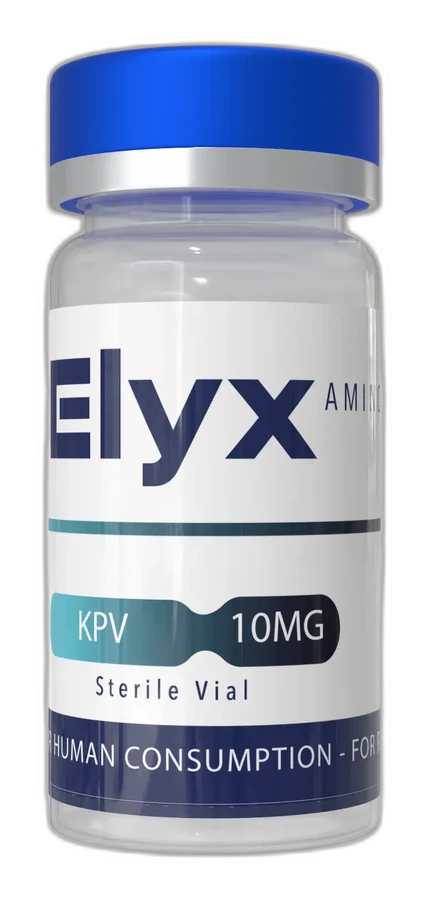
Research context: mechanisms, human and preclinical evidence, limitations and precautions are in How this works and References. The calculator (Spanish) converts any other volume.
KPV Dosage Chart (10 mg vial)
Dosing & Reconstitution Guide
Educational guide for reconstitution and daily dosing
Standard / Gradual Approach (2 mL = ~5 mg/mL)
| Week / phase | Daily dose | Units per injection (mL) |
|---|---|---|
| Week 1 | 200 mcg | 4 units (0.04 mL) |
| Week 2 | 300 mcg | 6 units (0.06 mL) |
| Week 3 | 400 mcg | 8 units (0.08 mL) |
| Weeks 4–8 | 500 mcg | 10 units (0.10 mL) |
Frequency: Once daily, subcutaneously, at a consistent time.
Reconstitution Steps
- Draw 2 mL of bacteriostatic water with a sterile syringe.1
- Inject slowly down the vial wall; avoid shaking to prevent foaming.2
- Gently swirl or roll until fully dissolved (clear solution).3
- Label with the reconstitution date and refrigerate at 2–8 °C, protected from light; use within 4 weeks.4
Important: this guide is for educational purposes only and is not medical advice. For research use only. Not for human consumption.
U-100 Conversion Table (2 mL = 5 mg/mL)
| U-100 units | Volume | Contains | Yield per vial |
|---|---|---|---|
| 2 | 0.02 mL | 100 mcg | 100 injections |
| 5 | 0.05 mL | 250 mcg | 40 injections |
| 10 | 0.10 mL | 500 mcg | 20 injections |
| 20 | 0.20 mL | 1 mg (1000 mcg) | 10 injections |
| 30 | 0.30 mL | 1.5 mg (1500 mcg) | 6 injections |
| 50 | 0.50 mL | 2.5 mg (2500 mcg) | 4 injections |
| 100 | 1.00 mL | 5 mg (5000 mcg) | 2 injections |
This section describes which dose a study or reference source used and what it measured. It is not a recommendation or an administration schedule. A trial dose belongs to its population, duration and supervision and does not transfer to anyone outside that context.
Supplies Needed
Straightforward 12- and 24-week planning for a 10 mg vial at 5 mg/mL.
KPV vials (10 mg each)
- Standard / Gradual Approach, 12 weeks: Minimum 4 vials (37.8 mg required).
- Standard / Gradual Approach, 24 weeks: Minimum 8 vials (79.8 mg required).
U-100 syringes (1 mL)
- Standard / Gradual Approach, 12 weeks: 84 new syringes for 84 injections.
- Standard / Gradual Approach, 24 weeks: 168 new syringes for 168 injections.
Bacteriostatic water
- Standard / Gradual Approach, 12 weeks: 8 mL total (2 mL per vial) → 3 × 3 mL vials.
- Standard / Gradual Approach, 24 weeks: 16 mL total (2 mL per vial) → 6 × 3 mL vials.
Alcohol swabs
- Standard / Gradual Approach, 12 weeks: 168 minimum; one box of 100 does not cover the calculation.
- Standard / Gradual Approach, 24 weeks: 336 minimum; one box of 100 does not cover the calculation.
Sharps container: one appropriately sized. Stability planning: totals are minimum arithmetic quantities; follow the product documentation for sterility, storage, handling loss and discard timing.
KPV 10mgView in store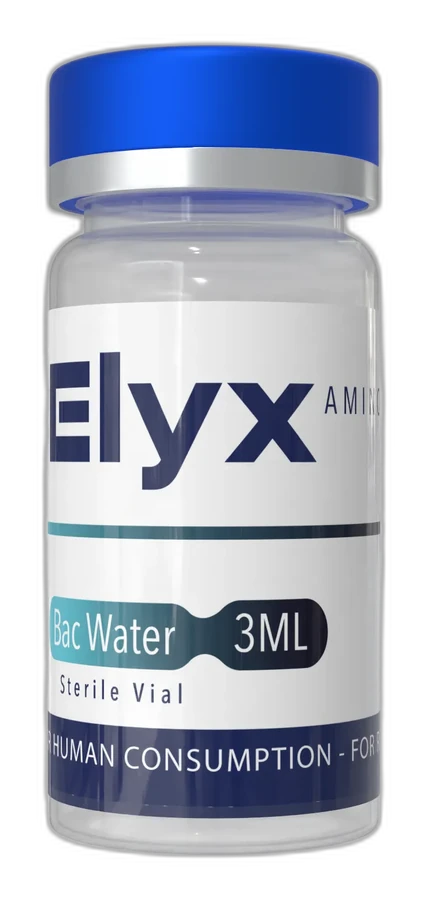 Bacteriostatic water 3 mLView in store
Store links may earn a commission. A supplier page is not scientific evidence or proof of suitability for human use.
KPV Vial and Research Context
- Reconstitute: add 2 mL of bacteriostatic water to produce 5 mg/mL.
- Frequency in the source: once daily, subcutaneously.
- Described range: schedules run from 200 mcg to 500 mcg per injection.
- Easy measuring: 1 U-100 unit = 0.01 mL = 50 mcg.
- Vial size: the 10 mg label is total nominal content, not a per-injection amount.
- Vial coverage: at 200 mcg per injection one vial supplies 50 injections; at 500 mcg it supplies 20. These are mass calculations, not storage periods.
Protocol Overview
Quick reference for the schedules shared by the cited literature.
- Frequency: once daily.
- Concentration: 10 mg in 2 mL = 5 mg/mL.
- Unit conversion: 1 U-100 unit = 50 mcg.
Dosing Schedule
The tables keep each approach separate.
- Standard / Gradual Approach: 200 mcg, 300 mcg, 400 mcg, 500 mcg, in phases (once daily).
- Measurement: use the units and mL shown beside each amount.
Storage Instructions
- Lyophilized (unopened): −20 °C for long-term storage; 2–8 °C if used within weeks. Protected from light.
- Reconstituted: 2–8 °C, do not freeze. Use within the documented period (typically up to 4 weeks with bacteriostatic water).
- Handling: do not shake; avoid temperature cycling; label with date and concentration.
- Discard: cloudy solutions, particulates or expired preparations are discarded.
More detail in the storage guide (Spanish).
Important Notes
- Research only: the referenced compounds are sold for laboratory research. Nothing here is medical advice or an administration schedule.
- Above 100 units: a 1 mL U-100 syringe cannot hold them; split across syringes or reconstitute with less volume.
- Accuracy: concentration depends on the actual volume added; measure the diluent with a syringe, not by eye.
- Verification: confirm vial contents against the batch certificate of analysis before calculating.
How This Works
KPV exerts its action through multiple anti-inflammatory pathways:
- NF-κB Inhibition blocks nuclear translocation of the master transcription factor of inflammation, reducing the production of pro-inflammatory cytokines (TNF-α, IL-1β, IL-6).
- Macrophage modulation induce polarization towards the M2 (anti-inflammatory and reparative) phenotype and reduces the M1 phenotype.
- Action on intestinal epithelial cells: improves intestinal barrier integrity, reduces permeability, and promotes epithelial regeneration.
- Melanocortin receptor activation preferentially binds to MC1R with lower affinity than α-MSH, which reduces pigmentary effects.
Research Applications
- Inflammatory bowel disease Improvement of clinical markers in ulcerative colitis and Crohn's disease in preclinical models
- Psoriasis and dermatitis reduction of plaques and improvement of itching in topical presentations
- Asthma and COPD Bronchial hyperreactivity research
- Leaky Gut Syndrome Restoration of tight junction integrity
- Autoimmunity Th17 response modulation and Treg cell regulation
- Post-exercise recovery: Reduction of low-grade inflammation in athletes
Precautions Described in the Literature
The safety profile is notably benign given its endogenous nature. Local injection site reactions and mild nausea are the most common adverse events. Avoid use in immunosuppressed patients without professional supervision.
Studied Combinations
- Full intestinal recovery: KPV + BPC-157 for mucosal-systemic synergy
- Chronic inflammation KPV + TB-500 for reducing inflammation and improving tissue angiogenesis
- Autoimmunity KPV + Selank for immune modulation + stress
- Aesthetics and skin: KPV + GHK-Cu for anti-inflammatory and regenerative synergy
Injection Technique in Research
- Route in the studies: subcutaneous, in abdominal or thigh adipose tissue, rotating the site.
- Syringe: 1 mL U-100 (100 units); read in units, not mL.
- Asepsis: alcohol swab on the stopper and the site; a new syringe per injection.
- Drawing: purge air, draw the units from the chart and verify before withdrawing the needle from the vial.
Full guide: U-100 syringes and reading units (Spanish).
Research Note
All content on this page is technical and educational. It describes how a vial is reconstituted, how a syringe is read and which amounts the cited sources describe. It does not replace the supervision of a qualified researcher or the judgment of a health professional, and it is not intended to diagnose, treat, cure or prevent any disease.
References
- Brzoska T, Luger TA, Maaser C, et al. α-melanocyte-stimulating hormone and related tripeptides: biochemistry, antiinflammatory and protective effects in vitro and in vivo. Endocr Rev. 2008;29(5):581-602.
- Kannengiesser K, Maaser C, Heidemann J, et al. Melanocortin-derived tripeptide KPV has anti-inflammatory potential in murine models of inflammatory bowel disease. Inflamm Bowel Dis. 2008;14(3):324-331.
- Dalmasso G, Charrier-Hisamuddin L, Nguyen HT, et al. PepT1-mediated tripeptide KPV uptake reduces intestinal inflammation. Gastroenterology. 2008;134(1):166-178.